Dashcam Role in Solo Road Trip Safety: 2026 Guide
Dashcam Role in Solo Road Trip Safety: 2026 Guide
TL;DR:
- A dashcam provides objective evidence, deters reckless driving, and enhances vehicle security during solo trips. It records incidents, monitors driver alertness, and offers parking surveillance, making it essential safety equipment. Using a dedicated device or a smartphone app like DriveSight ensures reliable protection on the road.
A dashcam is defined as a vehicle-mounted camera that continuously records driving footage, and its role in solo road trip safety is to serve as an ever-present witness when no one else is in the car with you. Solo drivers face a unique vulnerability: there are no passengers to corroborate your account of an accident, flag a road hazard, or call for help if you lose consciousness. Modern dashcams, from dedicated hardware units like the Wolfbox G900Pro to app-based solutions like the DriveSight Phone Dashcam app, address that gap directly. They record, detect, alert, and document so you can focus on driving.
How dashcams protect solo drivers on the road
The role of dashcam in solo road trip safety goes beyond simple recording. A dashcam functions as a dual-purpose tool: it documents every road event objectively, and its visible presence discourages unsafe behavior from other drivers around you. Dashcams serve as both deterrent and evidence provider, meaning they can prevent incidents from happening and simplify resolution when they do. That combination is especially valuable when you are traveling alone through unfamiliar territory with no backup.
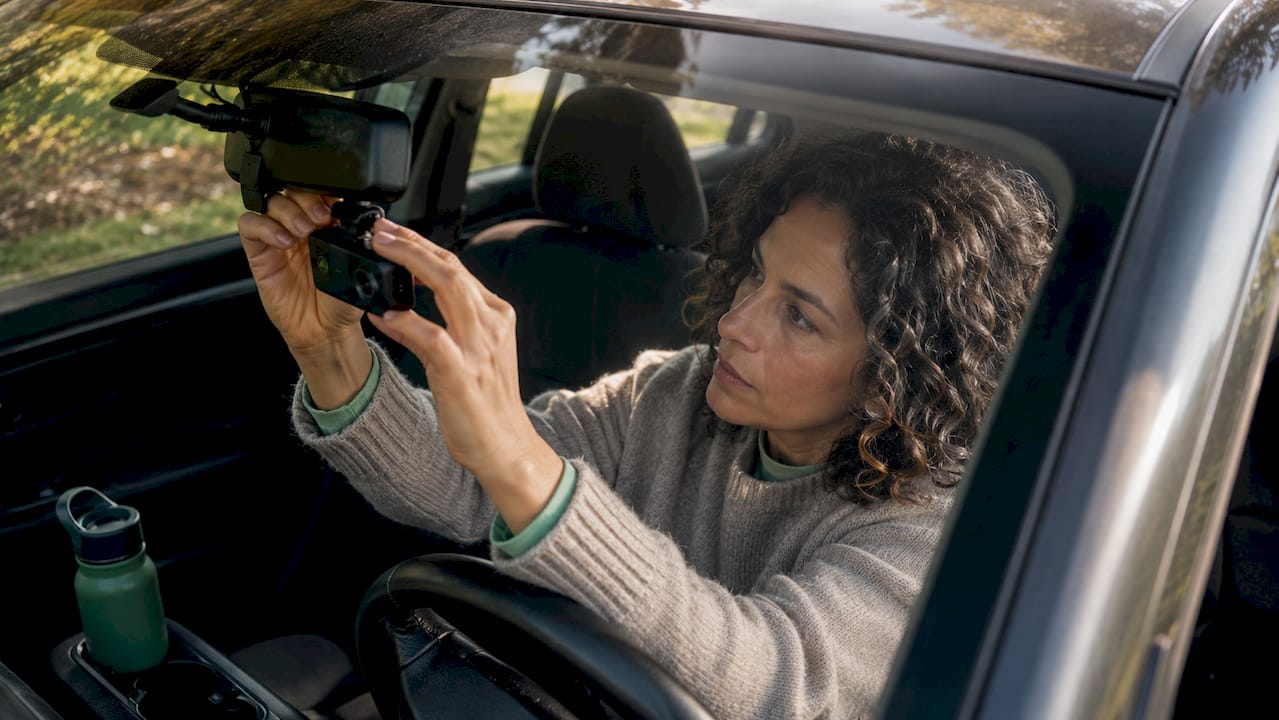
Solo travelers also benefit from dashcam features that go beyond the lens. Drowsiness detection, GPS speed logging, parking surveillance, and emergency SOS integration all address risks that multiply when you are the only person in the vehicle. The sections below break down each of these benefits in detail.
How dashcams support evidence collection and insurance claims
Dashcam footage provides objective video evidence that insurance companies and law enforcement accept as definitive proof of fault. That matters enormously for solo travelers because you have no passenger witness to back your version of events after a collision. Video removes the “he said, she said” dynamic entirely.
Real-world claims demonstrate this clearly. Footage showing a vehicle running a red light, a driver making an illegal lane change, or a hit-and-run in a parking lot has resolved disputes that would otherwise drag on for months. Insurance companies rarely offer premium discounts for dashcam ownership, but video evidence speeds up claims processing and eliminates disputes that would otherwise cost you time and money.
Dashcams also capture incidents that human memory distorts under stress. After an accident, adrenaline affects recall. A dashcam records the exact speed, angle, and sequence of events without bias.
Key evidence-related features to look for:
- Automatic crash save: Accelerometer-based impact sensing locks the current clip so loop recording cannot overwrite it.
- Loop recording: Continuous recording overwrites the oldest footage automatically, so you never run out of storage on a multi-day trip.
- GPS data overlay: Speed and location are embedded in the footage, adding legal weight to any claim.
- Cloud backup: Footage uploads automatically so it survives even if the device is damaged or stolen.
Pro Tip: Set your dashcam to save clips in 1-minute or 3-minute segments. Shorter clips are easier to locate and share with insurers than one continuous multi-hour file.
What dashcam features matter most for remote and long-distance trips?
Solo road trippers face conditions that commuters rarely encounter: unlit rural highways, wildlife crossings, extreme weather, and overnight parking in unfamiliar locations. The right dashcam features address each of those scenarios directly.
Night vision and low-light recording
High-quality night vision is the top priority for solo travelers driving on remote, poorly lit roads. Experienced solo travelers consistently rank low-light sensitivity above raw resolution. A 4K camera that washes out at dusk is less useful than a 1080p camera with a large aperture sensor that captures license plates at night. Wide-angle lenses covering 140 degrees or more record multiple lanes and roadside activity simultaneously.
GPS and speed monitoring
GPS logging adds a layer of accountability and utility. It records your exact route, timestamps every clip, and can flag speed limit violations in real time. For solo travelers, this data also serves as a travel log and can help emergency responders locate you if you report an incident.
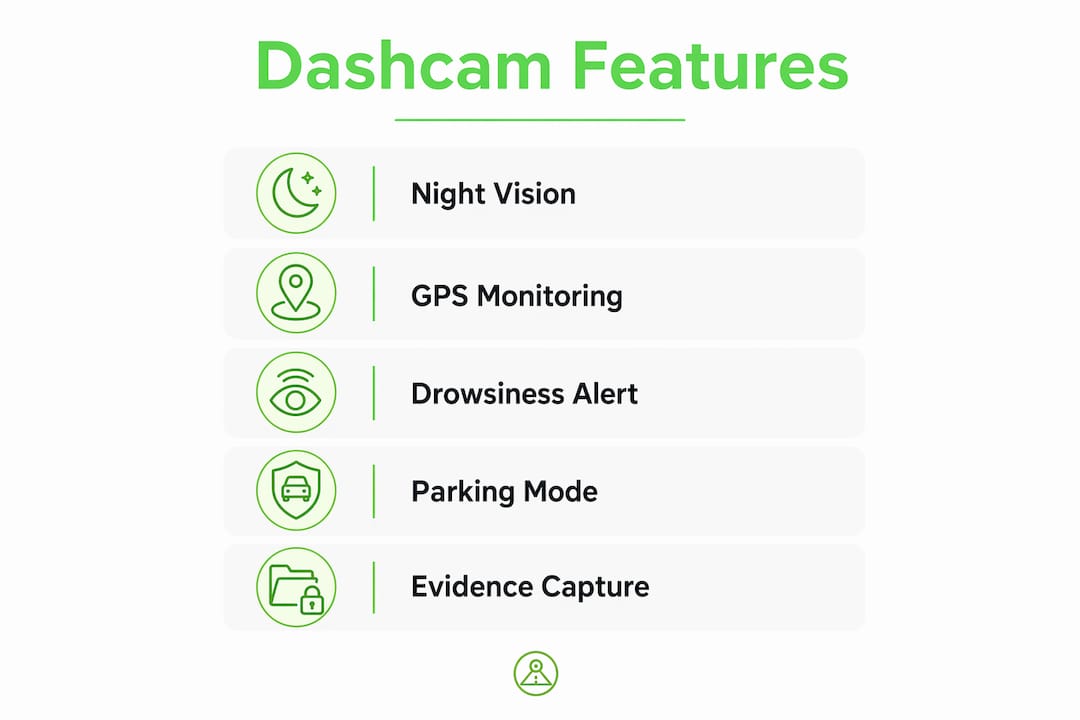
Drowsiness detection
Drowsy driving causes approximately 100,000 U.S. crashes every year. Advanced dashcams monitor eye movement and head position, triggering an audible alert when fatigue signs appear. On a solo 10-hour drive through Nevada or Montana, that alert can be the difference between a safe stop and a serious crash.
Parking surveillance mode
Parking mode records motion and impacts around your vehicle when the engine is off. For solo travelers stopping overnight at rest areas or unfamiliar motels, this feature monitors the car while you sleep. Motion-triggered recording conserves battery while still capturing any suspicious activity.
| Feature | Why it matters for solo trips |
|---|---|
| Night vision | Captures details on unlit rural roads after dark |
| GPS overlay | Embeds location and speed data into every clip |
| Drowsiness detection | Alerts fatigued drivers before a microsleep event |
| Parking mode | Monitors unattended vehicles during overnight stops |
| Emergency SOS integration | Triggers help requests after a detected impact |
Pro Tip: If you are repurposing an old Android phone as a dashcam, mount it on the windshield and enable DriveSight’s parking security mode before leaving the vehicle. You get full surveillance without draining your primary phone.
Do dashcams actually deter reckless driving and road rage?
Visible dashcams deter aggressive driving by making road behavior visible and recorded. Drivers who know they are being filmed are measurably less likely to tailgate, cut off other vehicles, or escalate a road rage incident. This effect is well-documented in fleet management research and applies equally to solo travelers sharing the road with commercial and private vehicles.
The psychology is straightforward. Recording creates accountability. A driver who might otherwise follow too closely or make an aggressive pass reconsiders when a dashcam is clearly visible on your windshield. That behavioral shift reduces the risk of incidents before they start.
Dashcams also influence your own driving. Knowing the camera is running encourages you to maintain safe following distances, signal properly, and avoid distracted driving. Solo travelers without passengers to observe them can drift into bad habits on long drives. A dashcam provides a passive form of self-monitoring.
“Dashcams serve both as a deterrent to unsafe driving and as critical evidence providers. Their presence can prevent incidents from occurring and simplify resolution if they do.” — These Fifty States
Dashcams also document wildlife encounters and road hazards that pose unique risks on remote routes. A deer crossing at dusk or a rock slide on a mountain pass gets recorded automatically, giving you footage to report hazards to local authorities.
Practical tips for choosing and using a dashcam on solo trips
Selecting the right dashcam starts with matching features to your specific travel patterns. A solo traveler doing weekend desert drives has different needs than someone crossing multiple states over two weeks.
-
Prioritize night vision over resolution. A camera with a large aperture sensor and good low-light performance outperforms a 4K unit with poor light sensitivity on the dark rural roads where solo travelers are most vulnerable.
-
Choose a model with built-in GPS. GPS data embeds location and speed into every clip, which strengthens any insurance claim and gives you a precise travel record.
-
Enable loop recording from day one. Loop recording ensures continuous footage without manual file management. Set the clip length to match your storage capacity and forget about it.
-
Mount for maximum coverage. Position the camera behind the rearview mirror to avoid obstructing your sightline. Angle it slightly downward to capture the road surface and any vehicles directly ahead.
-
Set up emergency SOS integration. Emergency SOS integration links impact detection to an automatic alert, which is critical when you are alone in a remote area and unable to call for help yourself.
-
Use cloud backup for long trips. Automatic cloud uploads mean your footage is safe even if the dashcam is damaged in the crash you are trying to document. DriveSight’s cloud backup option handles this without any manual steps.
-
Consider a smartphone dashcam app as your primary or backup unit. If you want a full comparison of phone versus hardware dashcams, the tradeoffs are smaller than most drivers expect. An Android phone running DriveSight delivers GPS logging, AI object detection via YOLOv8, crash save, and parking mode without any additional hardware investment.
Pro Tip: Before a long solo trip, do a 10-minute test drive with the dashcam running. Review the footage to confirm the angle, audio quality, and GPS data are all recording correctly. Fixing a mounting issue at home is far easier than discovering a problem after an incident.
Key takeaways
A dashcam is the single most effective solo travel safety tool because it provides objective evidence, deters aggressive drivers, and monitors your vehicle around the clock.
| Point | Details |
|---|---|
| Evidence collection | Dashcam footage resolves insurance disputes faster and eliminates reliance on memory alone. |
| Deterrent effect | Visible cameras reduce aggressive driving from other road users around your vehicle. |
| Fatigue protection | Drowsiness detection alerts solo drivers before fatigue causes a crash on long drives. |
| Parking security | Parking mode records motion near your unattended vehicle during overnight stops. |
| Emergency response | SOS integration triggers help requests automatically after a detected impact in remote areas. |
Why dashcams have become non-negotiable for solo travelers
We have spent years building and refining dashcam technology for drivers who spend real time on the road alone. The pattern we see consistently is this: solo travelers who add a dashcam to their setup report a genuine shift in confidence, not just security theater.
The conventional wisdom says dashcams are for accident documentation. That framing undersells them. The deterrent effect is real and immediate. The drowsiness alert has interrupted dangerous microsleep events for drivers who did not realize how fatigued they were. The parking mode has captured vandalism and hit-and-runs that would otherwise go unresolved.
What I find most compelling is how dashcams change solo traveler behavior before any incident occurs. You drive more deliberately when you know the camera is running. You stop sooner when you feel tired because the footage will show you were pushing past your limit. That behavioral loop is the most underrated benefit in the entire category.
My honest recommendation: treat a dashcam as a standard piece of safety equipment, not an optional accessory. Pair it with a vehicle tracker like ScorpionTrack for complete vehicle security on extended trips, and combine it with regular rest stops and a charged emergency phone. No single tool replaces good judgment, but a dashcam makes every other safety measure more effective.
— Cyberlab Automation
Turn your Android phone into a full dashcam with DriveSight
Solo travelers who want dashcam protection without buying dedicated hardware have a direct path forward.
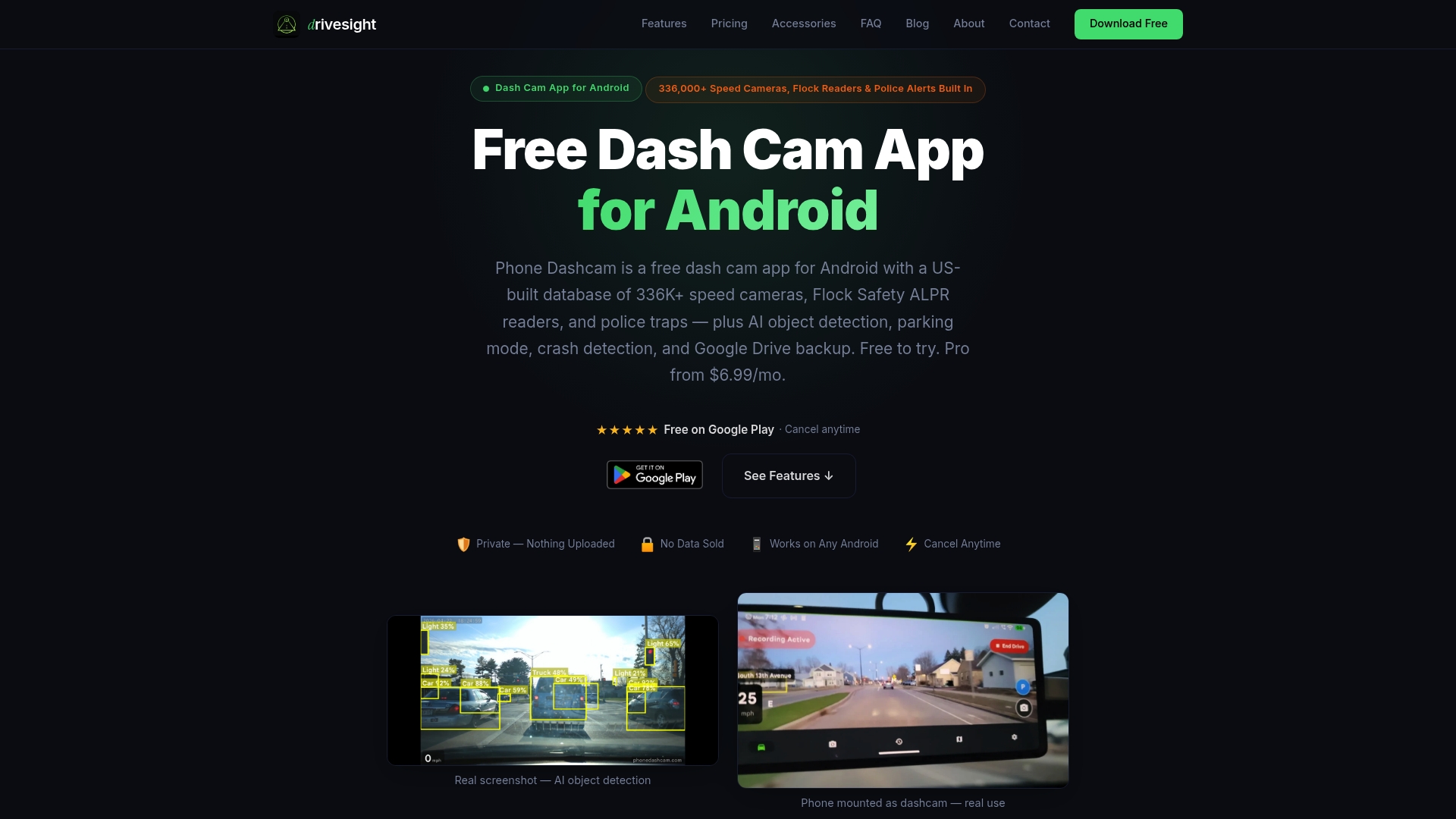
DriveSight’s free Android dashcam app transforms any Android phone into a fully functional dashcam with AI object detection, crash save, parking security mode, and cloud backup built in. There is no hardware to install and no upfront cost to get started. The app uses on-device YOLO detection to identify vehicles and pedestrians in real time, and its remote viewer lets you check your parked vehicle from anywhere. For solo road trippers who want reliable, evidence-grade recording on every drive, DriveSight is the most accessible starting point available.
FAQ
What is the main role of a dashcam on a solo road trip?
A dashcam continuously records driving footage to provide objective evidence after accidents, deter aggressive driving, and monitor your vehicle when parked. For solo travelers, it replaces the passenger witness you do not have.
Can dashcam footage actually help with insurance claims?
Yes. Dashcam footage is accepted by insurance companies as definitive evidence of fault, speeding up claims and eliminating disputes that rely on conflicting driver accounts.
How does drowsiness detection work in a dashcam?
Drowsiness detection uses a forward-facing or driver-facing camera to monitor eye closure and head position, triggering an audible alert when fatigue signs appear. Drowsy driving causes around 100,000 U.S. crashes annually, making this feature especially valuable on long solo drives.
Does a dashcam protect my car when I am not in it?
Parking mode records motion and impacts near your vehicle when the engine is off. Parking surveillance captures suspicious activity during overnight stops, rest area breaks, and any time the car is unattended.
Is a smartphone dashcam app as reliable as a dedicated hardware unit?
A smartphone running a dedicated dashcam app like DriveSight delivers GPS logging, AI detection, crash save, and cloud backup comparable to mid-range hardware units. The phone versus hardware comparison shows the gap is smaller than most drivers expect, especially for solo travelers who already carry an Android device.
Recommended
- Road Trip Dashcam Footage Tips for Memorable Drives
- What is road trip dashcam recording explained: your driver’s guide
- How a Dashcam Protects You During Remote Area Travel
- Dashcam Setup for Long-Haul Truck Cabs: 2026 Guide
Get Phone Dashcam free
Loop recording, crash detection, GPS tracking, and AI object detection — all in your phone. No new hardware required.
Download Phone Dashcam