Dashcam Evidence Collection Examples That Win Claims
TL;DR:
- Dashcam evidence collection involves capturing continuous, timestamped, and GPS-tagged video footage to document road incidents reliably. Properly preserved unedited footage with metadata can prove fault in cases like red light violations, lane changes, or rear-end collisions, facilitating quick dispute resolution. Immediate backup, documentation, and pairing with additional data enhance the evidence’s admissibility and strength in legal proceedings.
Dashcam evidence collection is defined as the systematic capture of continuous, timestamped, and GPS-tagged video footage that documents road incidents in a format courts and insurers can authenticate and act on. When footage includes embedded speed data, camera serial numbers, and unedited recordings from the moments before and after an event, it becomes the strongest single piece of evidence a driver can present. Apps like DriveSight and dedicated hardware systems both produce this type of footage. The difference between a settled claim and a drawn-out dispute often comes down to whether your recording meets these technical standards from the start.
1. dashcam evidence collection examples that prove fault
The most effective dashcam footage examples for proving fault fall into three categories: red light violations, sudden lane changes, and rear-end collisions. Each type has distinct visual characteristics that make fault clear without requiring witness testimony.

Red light running footage is compelling because the camera captures the traffic signal state at the exact moment of impact. When GPS coordinates and a timestamp confirm the intersection location, adjusters and attorneys have no room to dispute the sequence of events. Courts and insurers require footage with clear timestamps, GPS metadata, and continuous recording for admissibility.
Sudden lane change recordings are most convincing when a front camera captures the offending vehicle crossing lane markings without a turn signal. Rear camera footage adds a second angle that rules out the possibility your vehicle was already in the other driver’s path. Multi-channel dashcams provide more convincing evidence than front-only cameras by covering blind spots and multiple angles.
For rear-end collisions, the key footage elements are:
- Your vehicle’s speed at the moment of impact, confirmed by embedded GPS data
- The gap between your vehicle and the one ahead, visible in the seconds before impact
- Brake light activation on the vehicle in front, which establishes whether the stop was sudden or gradual
- The point of contact, which confirms the other driver struck you rather than the reverse
Pro Tip: Mount a second camera facing rearward before a long highway trip. Rear-end collision claims are among the most disputed, and a rear camera recording showing the other vehicle accelerating into yours resolves the dispute in minutes.
2. how to preserve and authenticate dashcam footage
Raw, unedited footage is the foundation of any successful claim. Trimming or editing dashcam videos creates chain-of-custody problems that even simple cuts can trigger. Courts treat edited clips with suspicion, and forensic analysts can detect file modifications that undermine your credibility.
Follow these steps immediately after an incident:
- Stop the recording and copy the full file to a separate storage device or cloud backup before the dashcam’s loop recording overwrites it. Many systems overwrite footage within 24–72 hours.
- Document the metadata by noting the camera model, serial number, firmware version, and the exact file name generated by the device. Dashcam evidence is strongest when augmented with timestamps, GPS coordinates, camera serial numbers, and a documented timeline of events.
- Send a preservation letter to any other party whose vehicle may have a dashcam or whose business may have surveillance footage. Immediate issuance of spoliation letters is critical because rolling loop recordings can lose critical data within days.
- Retain footage from before and after the event. Courts want context. Footage that begins one second before impact and ends immediately after raises questions about what was edited out.
- Avoid posting the footage publicly. Sharing dashcam footage on social media before settling a claim can expose private information and give opposing counsel material to use against you.
- Combine video with corroborating data. Successful submissions pair dashcam footage with vehicle black box data and telematics to create a hybrid evidence package that adjusters find very difficult to challenge.
Pro Tip: Use DriveSight’s automatic crash save feature, which locks the incident clip the moment the accelerometer detects an impact. This prevents loop overwriting without any manual action on your part.
3. dashcam system setups compared for evidence quality
The setup you choose directly affects how much of an incident your footage captures. A front-only camera covers the most common scenario but leaves significant gaps. Here is how the main system types compare:
| System Type | Coverage | Best Use Case | Evidence Limitation |
|---|---|---|---|
| Single front channel | Forward view only | Basic personal vehicle use | Misses rear impacts and side disputes |
| Dual channel (front + rear) | Front and rear | Most personal and rideshare drivers | No interior or side coverage |
| Four-channel | Front, rear, left, right | Commercial vans, delivery vehicles | Higher cost and storage demand |
| 360° panoramic | Full surround | Parking security, fleet vehicles | Lower resolution per angle |
| Interior + exterior | Cabin and road | Rideshare and taxi operators | Privacy considerations for passengers |
A dual-channel setup covers the two most common dispute scenarios: front collisions and rear impacts. For rideshare drivers, adding an interior camera documents passenger behavior and protects against false assault or damage claims. Commercial fleets benefit most from four-channel systems because they eliminate blind spots on wide vehicles where side-swipe disputes are common.
DriveSight’s Android app supports multi-angle recording by running on multiple phones mounted at different positions in the vehicle. This gives fleet operators and rideshare drivers a flexible, low-cost path to comprehensive coverage without dedicated hardware at every position.
4. real-world dashcam footage examples across contexts
Concrete dashcam footage dispute resolution examples show how different driver types have used video evidence to resolve claims quickly and favorably.
- Motorcycle accident settlement: A rider with a handlebar-mounted camera captured a sedan making an unsignaled left turn directly into the bike’s path. The footage showed the rider’s speed, the signal state, and the sedan crossing the center line. Clear dashcam footage has led to 4x higher payouts in some motorcycle accident cases. The video eliminated any comparative fault argument and the case settled before trial.
- Fleet truck avoiding litigation: A delivery driver’s four-channel system recorded a passenger car cutting in front of the truck and braking hard. The rear camera on the car’s side showed the car’s brake lights activating less than one second before impact. The fleet’s insurer used the footage to withdraw from litigation entirely, saving significant legal costs. Fleet dashcam evidence best practices are now standard policy at many logistics companies for exactly this reason.
- Rideshare driver interior claim: A driver’s interior camera recorded a passenger claiming a phone was stolen during the ride. The footage showed the passenger placing the phone in their own bag before exiting. The claim was dismissed within 48 hours of the driver submitting the clip to the platform’s support team.
- Parking lot hit-and-run: A driver using DriveSight’s parking security mode captured a vehicle striking the parked car and driving away. The footage included a clear license plate read. Dashcam footage can capture license plates in hit-and-run cases, giving police and insurers the information needed to identify the at-fault party.
Pro Tip: Activate parking mode before leaving your vehicle in any high-traffic lot. Motion-triggered recording preserves battery while capturing the moments that matter most.
5. legal and privacy considerations for dashcam recordings
Dashcam footage admissibility varies by jurisdiction. Some states require all parties in a vehicle to consent to audio recording, while others permit video-only recording without consent. Checking your state’s rules before relying on audio-inclusive footage is a necessary step. DriveSight’s dashcam laws by state resource covers all 50 states in detail.
“Courts have ruled that preventing fraud with dashcam evidence outweighs privacy concerns when footage is used properly and focused on incident investigation rather than general surveillance.” — Video Instead of Statement: Dashcams in Accident Investigations
Dashcam footage can exonerate or incriminate drivers. Footage showing your vehicle speeding or following too closely can reduce your compensation even if the other driver was primarily at fault. Reviewing footage with an attorney before submitting it to any insurer or opposing party is the standard recommendation from personal injury counsel. The footage does not disappear from the legal record once submitted, so knowing what it shows before sharing it is critical.
Businesses and law enforcement also rely on preservation letters to secure camera footage before retention schedules trigger automatic deletion. Agency and business retention schedules vary widely. Acting within 24 hours of an incident gives you the best chance of preserving footage from third-party cameras that may have captured the event from a different angle.
Key takeaways
Effective dashcam evidence collection requires unedited footage, complete metadata, and immediate preservation steps taken within hours of any incident.
| Point | Details |
|---|---|
| Preserve raw files immediately | Copy the full, unedited clip to a backup device within hours to prevent loop overwriting. |
| Metadata is mandatory | Timestamps, GPS coordinates, and camera serial numbers satisfy court authentication standards. |
| Multi-channel beats single-channel | Front and rear cameras together eliminate the most common dispute angles in claim reviews. |
| Never edit or post publicly | Trimmed clips and social media posts undermine chain of custody and legal strategy. |
| Combine video with corroborating data | Pairing footage with telematics or black box data creates evidence that adjusters cannot easily challenge. |
What we’ve learned after years of building dashcam tools
The single most common mistake drivers make is treating dashcam footage as a passive backup rather than active evidence. We have seen users capture perfect footage of a clear-fault incident, then unknowingly overwrite it by driving home without backing up the file. The camera did its job. The preservation step failed.
The second pattern we see repeatedly: drivers share footage on social media within hours of an incident because the video clearly shows the other driver at fault. That instinct is understandable. The problem is that opposing counsel will screen-record that post, note the timestamp, and use it to argue that the claimant was more focused on public attention than on safety. Courts notice that framing.
What actually works is treating your footage the way a forensic investigator would treat physical evidence. You copy it, you label it, you document the chain of custody, and you hand it to your attorney before anyone else sees it. Corroborating it with GPS track data and, where available, event data recorder output from the vehicle makes the package nearly impossible to dispute. We built DriveSight’s automatic crash save and cloud backup features specifically to handle the preservation step without requiring the driver to remember anything in a stressful post-incident moment.
The drivers who get the best outcomes are not necessarily the ones with the most expensive cameras. They are the ones who understand that the footage is only as strong as the process surrounding it.
— Cyberlab Automation
Turn your android phone into a court-ready dashcam
DriveSight transforms any Android phone into a fully functional dashcam with features built specifically for evidence collection. The app records in high resolution with embedded GPS coordinates and timestamps on every frame. Accelerometer-based crash detection automatically locks and saves incident clips before loop recording can overwrite them.
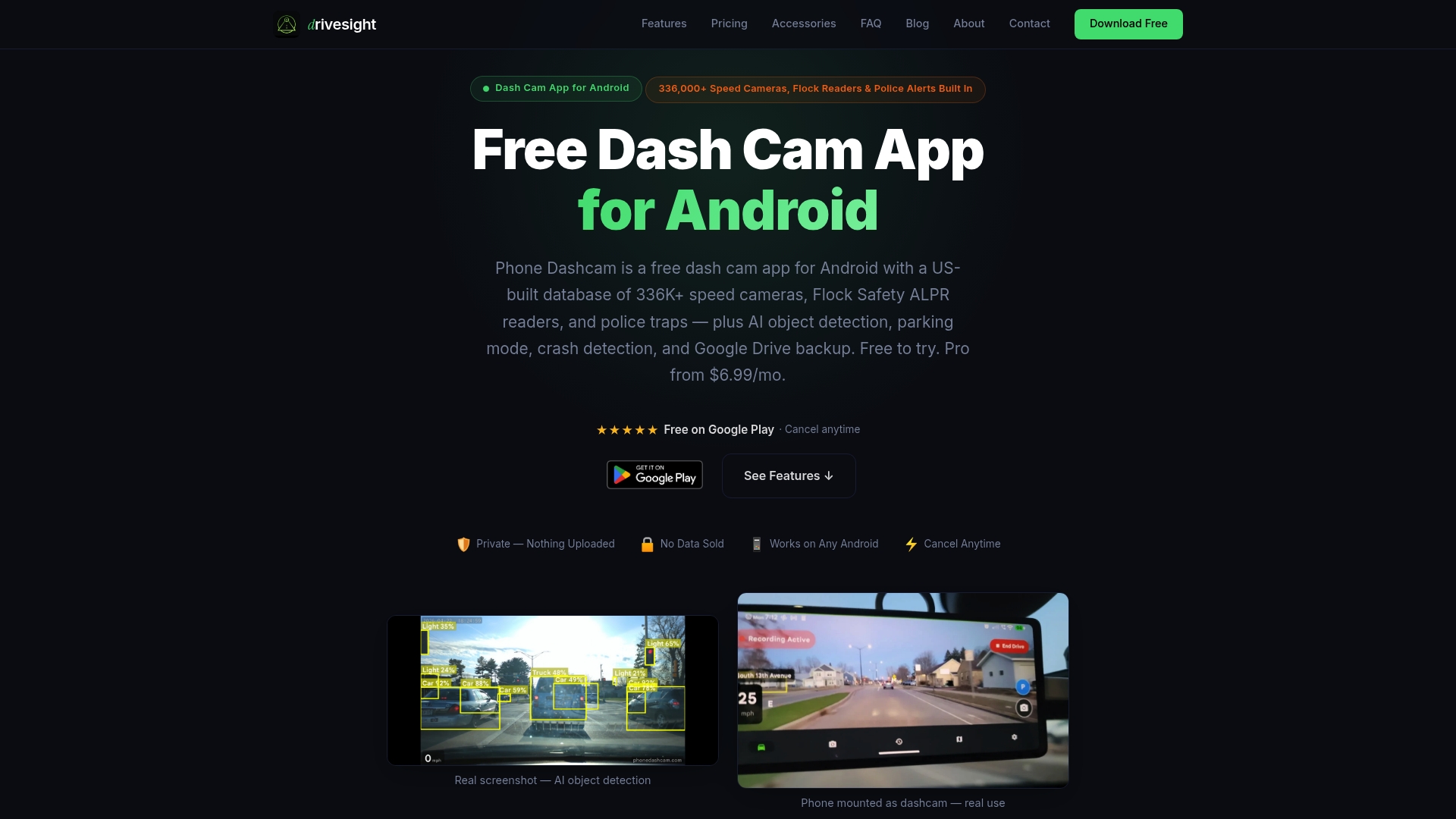
Cloud backup sends protected clips off the device immediately, so a damaged or stolen phone does not cost you your evidence. The DriveSight Android dashcam app is free to download, with premium features including parking security mode, AI object detection powered by YOLOv8, and remote viewing for fleet operators. If you want to see how the app compares to other options before committing, the app comparison page breaks down the differences in detail.
FAQ
What makes dashcam footage admissible in court?
Courts require continuous, unedited footage with clear timestamps, GPS metadata, and a documented chain of custody. Missing or altered metadata is the most common reason footage is rejected.
How soon should i preserve dashcam footage after an accident?
Preserve footage within hours of the incident. Many dashcams use loop recording that overwrites files within 24–72 hours, and sending a spoliation letter to other parties should happen the same day.
Can dashcam footage be used against me in a claim?
Yes. Footage showing speeding, distracted driving, or following too closely can reduce your compensation. Review all footage with an attorney before submitting it to any insurer or opposing party.
What is the best dashcam setup for comprehensive evidence?
A dual-channel setup covering front and rear is the minimum for most drivers. Rideshare operators and commercial drivers benefit from adding an interior camera to cover passenger disputes and blind-spot incidents.
Does parking mode dashcam footage hold up as evidence?
Yes, provided the footage includes timestamps and GPS data. Motion-triggered parking mode recordings have been used successfully in hit-and-run and vandalism claims, particularly when they capture a clear license plate read.
Recommended
- Fleet Dashcam Evidence Best Practices for Managers
- How Dashcams Capture Rear-End Collision Proof
- Dashcam storage strategies for Android phone users
- Road Trip Dashcam Footage Tips for Memorable Drives
Get Phone Dashcam free
Loop recording, crash detection, GPS tracking, and AI object detection — all in your phone. No new hardware required.
Download Phone Dashcam