How Fleet Dashcams Cut Down on Reckless Driving
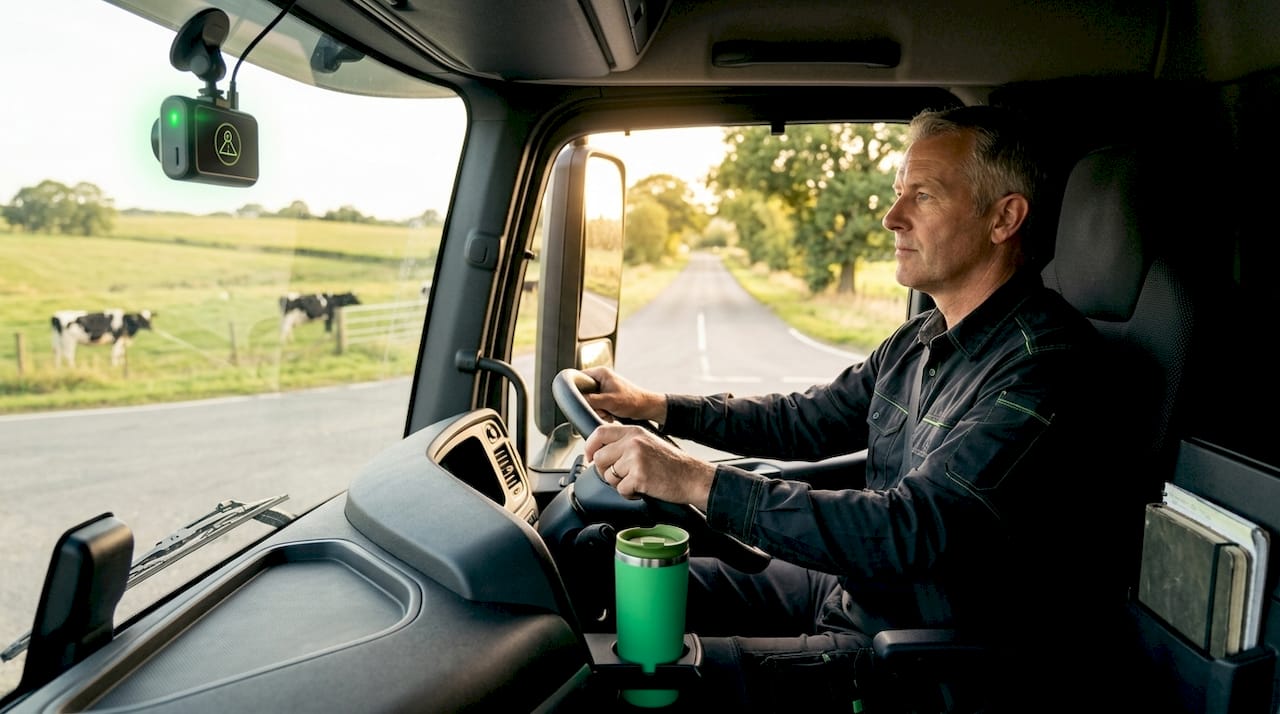
Fleet operators who treat dashcams as simple recording devices are leaving their biggest safety gains on the table. The real reason why fleet dashcam deters reckless driving has more to do with human psychology and real-time accountability than the footage itself. Drivers who know they are being monitored change their behavior behind the wheel, often before a safety manager says a single word. This guide covers how AI-powered monitoring, legal protection, privacy management, and coaching-centered programs work together to reduce incidents, protect your business, and build a safety culture that actually sticks.
Table of Contents
- How fleet dashcams improve driver safety and behavior
- Fleet dashcam footage as a legal and insurance defense tool
- Balancing privacy and data management in dashcam programs
- Integrating dashcam insights into driver coaching and safety culture
- Why fleet dashcams succeed only when used wisely and respectfully
- Enhance your fleet safety with DriveSight’s cost-effective app
- Frequently asked questions
Key Takeaways
| Point | Details |
|---|---|
| Dashcams reduce reckless driving | Real-time alerts and monitoring encourage safer driving and cut preventable accidents by up to 40%. |
| Video footage protects fleets legally | Dashcam recordings exonerate innocent drivers and speed up insurance claims through clear objective evidence. |
| Privacy management is essential | Fleets must enforce clear policies and obtain consent to handle dashcam data lawfully and ethically. |
| Use footage for coaching | Storytelling and positive driver coaching based on video content fosters lasting safety culture improvements. |
| Success requires respect and balance | Focusing on coaching over discipline helps maintain driver morale and supports sustainable program adoption. |
How fleet dashcams improve driver safety and behavior
Now that you understand what fleet dashcams are, let’s explore how they actively improve driver safety and reduce reckless driving. The core mechanism is straightforward: visibility changes behavior. When drivers know a camera is recording and that AI is actively flagging events like hard braking, sharp cornering, or phone use, they self-regulate. That self-regulation is the engine of safer fleets.
Modern fleet safety cameras do far more than record video. AI-powered systems detect distracted driving, monitor eye movement for drowsiness, and issue real-time audible alerts inside the cab the moment a risk pattern appears. This immediacy is what makes the technology work. A weekly report lands after the damage is already done. An in-cab alert fires while the driver still has time to correct course.
The numbers support this directly. AI-powered dash cams reduce fleet accidents by 25 to 40 percent, lower insurance premiums by 15 to 25 percent, and deliver full ROI within 8 to 14 months. That kind of impact is not from recording alone. It comes from continuous feedback loops that reshape driver habits over time.
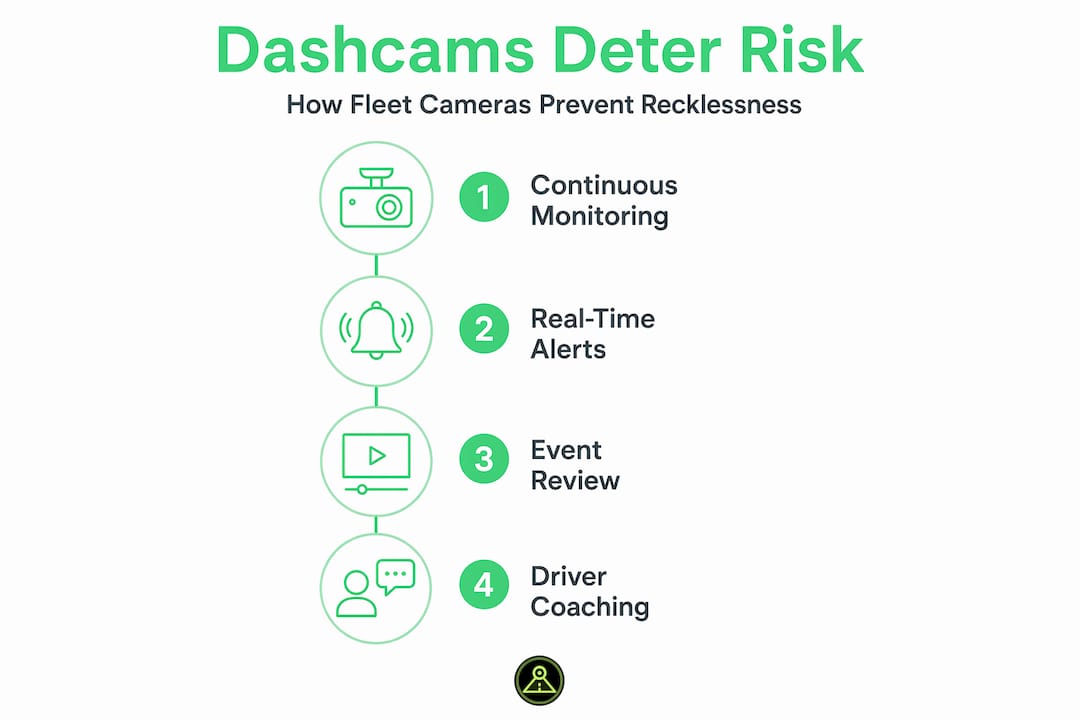
Understanding why phone dashcams work at this level is useful context. Here is what the monitoring loop looks like in practice:
- Real-time speeding alerts fire the moment a driver exceeds a threshold, acting as a dashcam deterrent for speeding before it escalates.
- Harsh braking and acceleration detection flags aggressive driving patterns linked to higher crash risk.
- Distracted driving detection uses AI object detection to identify phone use or inattention.
- Continuous loop recording ensures there are no gaps in coverage, which itself discourages shortcuts.
- Event-triggered saves automatically preserve footage when the accelerometer detects a collision or near-miss.
The combination of real-time alerts and post-trip review is more effective than either approach alone. Drivers respond to immediate correction, but reviewing flagged clips in coaching sessions reinforces lasting change. For more actionable guidance, the fleet dashcam safety tips on our site go deeper into program setup.
Pro Tip: Do not wait for incidents to review footage. Schedule brief weekly reviews of flagged events with each driver. Consistent, low-stakes feedback creates habit change faster than rare, high-stakes conversations.
Fleet dashcam footage as a legal and insurance defense tool
Beyond improving driving habits, dashcams serve as a critical legal tool to defend your fleet from wrongful claims and reduce insurance friction. This is one of the most underappreciated benefits of fleet dashcams, and it becomes starkly clear the first time your fleet faces a fraudulent claim.

Staged crashes are a documented problem for commercial fleets. A driver with a clean record and a vehicle full of evidence gets hit by someone who then claims the fleet driver was at fault. Without footage, the dispute drags on for weeks, attorneys get involved, and your insurance absorbs the cost regardless of fault. With footage, the story changes instantly.
Dashcam footage exonerates drivers in 50 to 99 percent of not-at-fault incidents, providing objective evidence that prevents fraudulent claims and speeds up insurance settlements from weeks to minutes. That is not a marginal improvement. That is the difference between a significant financial loss and a closed case.
“Clear video evidence shifts the burden of proof immediately. Adjusters no longer need weeks of investigation when 60 seconds of footage shows exactly what happened.”
The legal and financial protections break down into several concrete benefits:
- Fault determination: Footage removes ambiguity about vehicle positions, speeds, and driver actions at the moment of impact.
- Fraud prevention: Would-be bad actors are far less likely to stage incidents involving vehicles they know are equipped with cameras.
- Faster settlements: Insurers settle claims with video evidence significantly faster, reducing vehicle downtime and legal fees.
- Liability protection: Clear video can result in full liability assignment to the other party, protecting your fleet’s loss history.
- Driver vindication: When a driver is not at fault, footage protects their record and your relationship with them.
Understanding dashcam laws by state is an important first step before deployment, since recording rules vary. If you ever do face an incident, having a clear process ready is essential. A solid accident response guide is worth having in your fleet documentation alongside your dashcam policy.
Balancing privacy and data management in dashcam programs
While dashcams enhance safety and liability defense, it is crucial to manage privacy and data responsibly to maintain trust and legal compliance. This is where many fleet programs stumble. The technology works, but poorly managed data creates legal exposure and erodes driver trust faster than any safety benefit can repair it.
Clear data retention and privacy policies are not optional. Organizations that fail to define how footage is collected, stored, accessed, and deleted face real legal risk, particularly when dashcams capture audio, which is subject to stricter wiretapping laws in many states.
Here is a practical framework for responsible dashcam data management:
- Obtain documented consent before recording audio. Have drivers sign a clear acknowledgment that outlines what the dashcam records, how footage is used, and who can access it. This is non-negotiable in states with two-party consent laws.
- Define retention periods and stick to them. Most fleets retain footage for 30 to 90 days unless an incident flags the clip for preservation. Keeping footage longer than necessary increases your liability exposure without adding safety value.
- Limit access to footage by role. Not every manager needs to review every clip. Define who can pull footage and under what circumstances. This protects drivers and limits misuse.
- Use encrypted storage and secure cloud backup. Whether you store footage locally on device or in the cloud, encryption protects sensitive data from unauthorized access.
- Communicate the program openly before launch. Tell drivers exactly what the system does, why the company is implementing it, and how footage will and will not be used. Transparency reduces resistance significantly.
Pro Tip: Include a sample dashcam policy in your onboarding documentation. Drivers who understand the rules before they start are far less likely to feel surveilled and far more likely to treat the program as a safety resource.
Thoughtful dashcam storage strategies help you stay efficient without retaining more data than you need. Pairing that with a clear understanding of your app’s privacy features ensures you are protected at every level. For fleets on a budget, it is also worth considering the ongoing cost of dashcam maintenance as part of your total program investment.
Integrating dashcam insights into driver coaching and safety culture
To capture the full safety benefits of dashcams, integrating footage analysis into empathetic coaching programs is key to lasting driver behavior change. This is the step most fleets skip, and it is the reason many programs plateau after an initial safety improvement.
Installing cameras and waiting for incidents is a passive approach. It catches problems but does not prevent them. Active coaching programs use dashcam footage to tell real stories about real situations your drivers have actually experienced. That specificity is what makes safety training land.
The most effective safety programs use dashcam data for storytelling and coaching, creating an emotional connection to safety that breaks through driver complacency more effectively than traditional policy-based training. Showing a driver a clip of their own near-miss is more powerful than any slide deck.
Here is how to build this into your program:
- Lead with positive examples. When a driver handles a difficult situation well, show it. Recognition reinforces good behavior and signals that the camera is not just watching for mistakes.
- Use real incidents, not hypotheticals. Generic training scenarios feel abstract. Footage from your own fleet makes the lesson immediate and credible.
- Keep coaching sessions private and constructive. One-on-one reviews feel supportive rather than punitive. Group reviews of anonymized clips can build team-wide awareness without singling anyone out.
- Track improvement, not just incidents. If a driver’s harsh braking events drop 40 percent over two months, say so. Measurable progress motivates continued improvement.
| Program approach | Driver morale | Incident reduction | Retention impact |
|---|---|---|---|
| Punitive, discipline-focused | Low | Short-term only | High turnover |
| Coaching and recognition-focused | High | Sustained improvement | Lower turnover |
| No coaching, cameras only | Neutral | Minimal | No significant impact |
Understanding the full range of dashcam recording modes helps you configure your system to capture the events most useful for coaching, not just crashes. And if you are evaluating whether a smartphone app can genuinely replace dedicated hardware, the phone vs. dedicated dashcam comparison lays out the tradeoffs clearly.
Pro Tip: Create a “near-miss library” from anonymized footage. Reviewing these clips in monthly safety meetings gives drivers concrete examples of hazards they might encounter, without the retrospective cost of an actual collision.
Why fleet dashcams succeed only when used wisely and respectfully
We have seen how the technology works, and the data is compelling. But here is what the statistics do not capture: dashcam programs fail more often because of how they are managed than because of how they are installed.
The fleets that get the most out of fleet video monitoring are not the ones with the most cameras. They are the ones where drivers trust the program. That trust is built through transparency, consistency, and a genuine commitment to using footage for improvement rather than punishment.
Successful adoption relies on moving from punitive to proactive management. Using footage for coaching rather than discipline is the key to maintaining driver morale and preventing the surveillance culture that leads to high turnover. We have seen this pattern repeatedly: fleets that discipline first see short-term improvement and long-term attrition. Fleets that coach first see both sustained safety gains and lower turnover.
There is also a practical privacy dimension here that goes beyond legal compliance. When drivers feel that footage is used fairly and only for genuine safety purposes, they stop resisting the technology and start supporting it. They report road hazards. They ask for coaching sessions. They become invested in the outcome.
The framing matters enormously. A dashcam program introduced as “we are watching you” will fail. The same program introduced as “this protects you and helps us support you” will succeed. That is not a marketing line. It is accurate, and drivers know the difference.
Understanding what dashcam programs actually do well for drivers, not just operators, helps you make that case internally. Invest the time in genuine buy-in before you deploy, and the technology will do the rest.
Enhance your fleet safety with DriveSight’s cost-effective app
For fleet operators ready to adopt affordable technology and transform driver safety, DriveSight offers a solution built around exactly what this article describes.
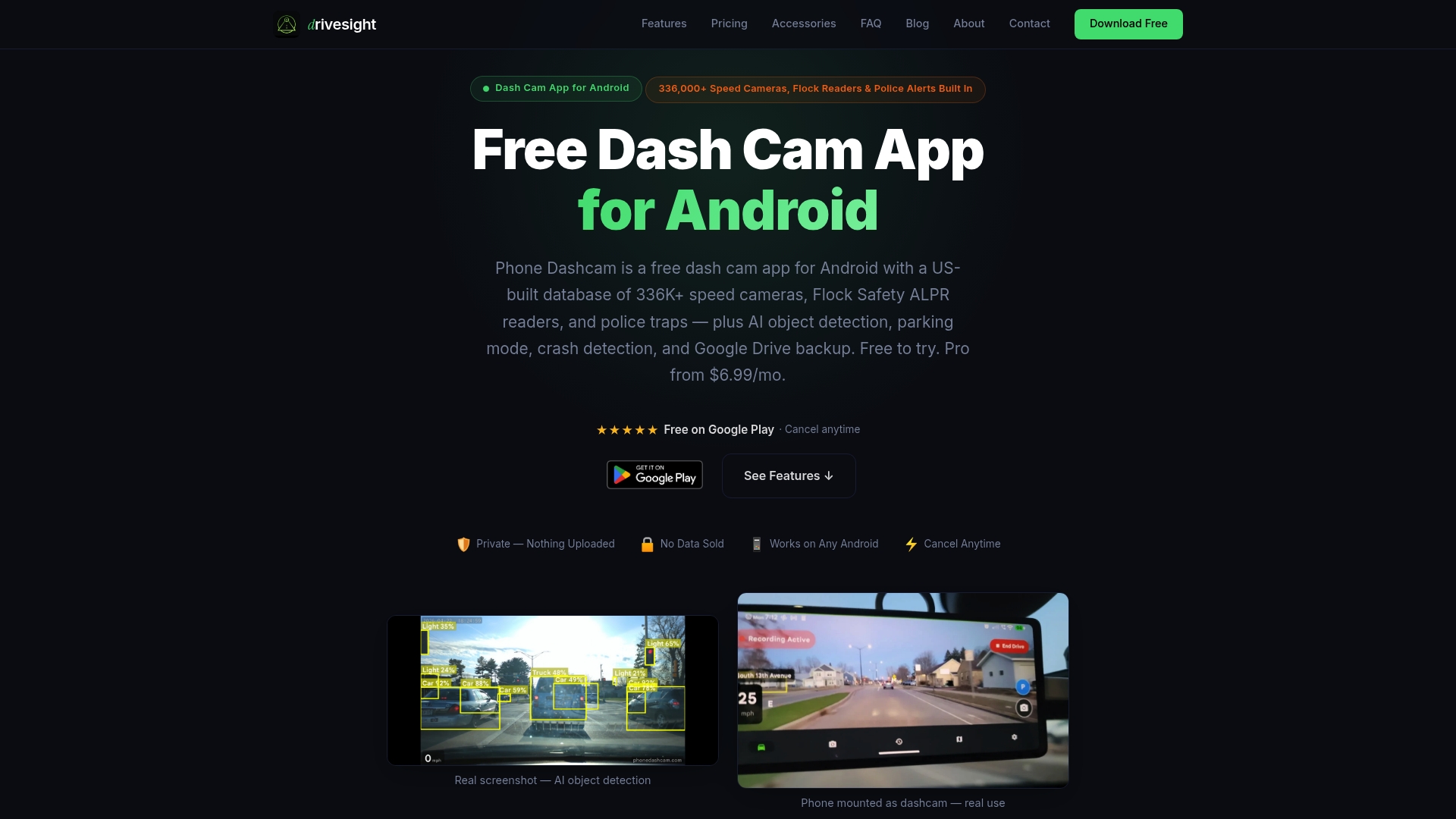
The DriveSight app turns existing Android smartphones into AI-powered fleet safety cameras with no hardware investment required. It includes real-time alerts for speeding and distracted driving, accelerometer-based crash detection, automatic event saves, and cloud backup for streamlined footage review. The app’s full feature set supports both liability protection and the coaching-centered programs that drive lasting behavior change. Fleet managers can also use the remote viewer to access footage for coaching sessions without needing physical access to each device. It is a practical, scalable way to build the kind of fleet safety culture this article outlines.
Frequently asked questions
How do fleet dashcams reduce reckless driving?
Fleet dashcams deter reckless driving through real-time alerts and continuous monitoring that encourage drivers to self-correct unsafe habits before incidents occur. AI-powered alerts modify driver behavior in the moment, reducing risky behaviors by up to 56 percent.
Can dashcam footage really protect drivers from false insurance claims?
Yes. Dashcam footage exonerates drivers in 50 to 99 percent of not-at-fault incidents by providing objective, irrefutable evidence that prevents fraudulent claims and accelerates settlements from weeks to minutes.
What legal considerations should fleets keep in mind when using dashcams?
Fleets must establish clear data retention and privacy policies, obtain explicit driver consent for audio recording, and manage footage securely to comply with applicable state and federal laws.
How can fleets effectively use dashcam footage for driver coaching?
Fleets should use footage to tell real safety stories, reinforce positive behavior, and deliver private, constructive coaching. Storytelling-based coaching creates emotional engagement that outlasts any traditional policy-based training.
What makes a dashcam program succeed in a fleet environment?
Programs succeed when footage is used for coaching rather than punishment. Coaching over discipline maintains driver morale, reduces turnover, and sustains safety improvements far longer than purely punitive approaches.
Recommended
- DriveSights Are Not What You Think — Why They Actually Work Now in 2026
- How dashcam apps capture and preserve your best drive moments
- DriveSight vs Real Dashcam: Honest Comparison (2026)
- How dashcams store overnight delivery footage safely
Get DriveSight free
Loop recording, crash detection, GPS tracking, and AI object detection — all in your phone. No new hardware required.
Download DriveSight