Why Commuters Need Dashcam Evidence: 2026 Guide
Why Commuters Need Dashcam Evidence: 2026 Guide
TL;DR:
- Dashcam evidence provides objective proof of traffic incidents, which courts widely accept when properly preserved.
- Proper handling, including preservation and legal compliance, is essential to ensure footage remains admissible and effective.
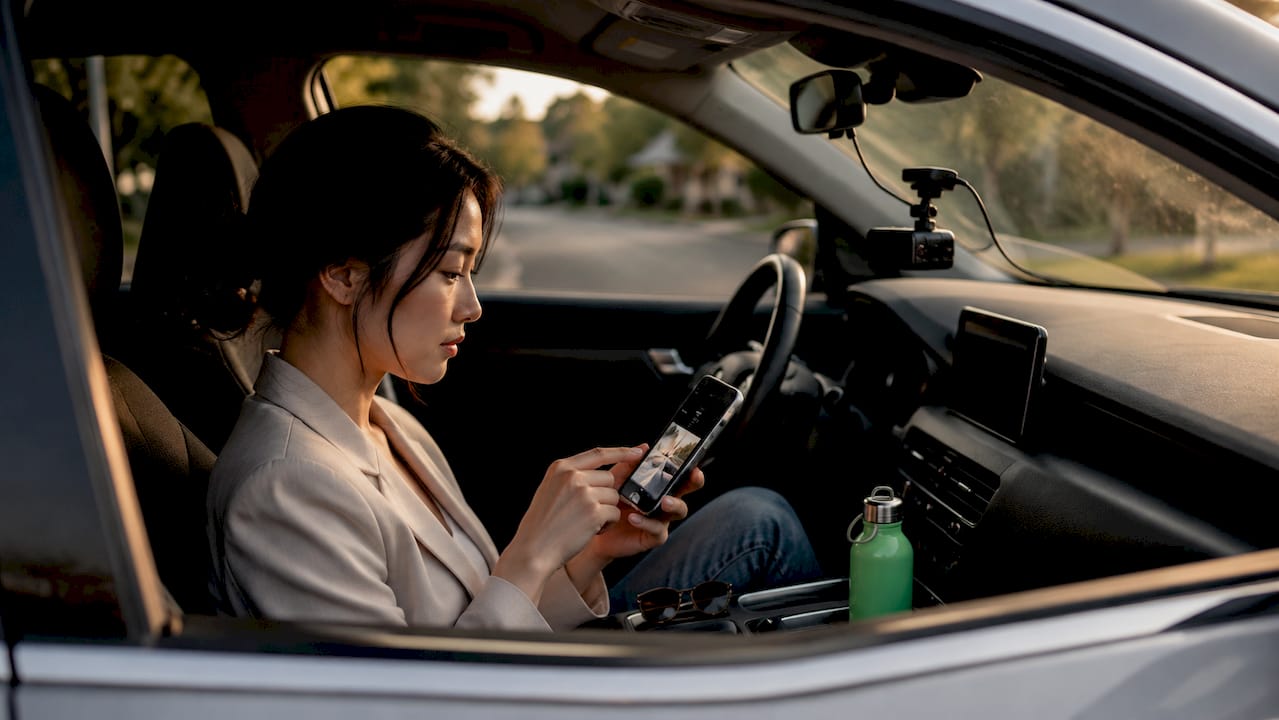
Dashcam evidence is defined as timestamped, GPS-tagged video footage recorded continuously from a vehicle-mounted camera, and it is the most reliable tool commuters have to prove fault in a traffic incident. About 30% of U.S. drivers now record their trips regularly, and half of those who captured a crash used the footage in a legal or insurance proceeding. That adoption rate reflects a clear reality: courts across the U.S. and Europe accept dashcam footage when it meets three evidentiary standards, relevance, authentication, and lawful recording. For commuters navigating dense traffic every day, understanding why commuters need dashcam evidence is not optional. It is the difference between winning a claim and absorbing costs you did not cause.
Why commuters need dashcam evidence in accident disputes
Dashcam footage eliminates the “he-said, she-said” deadlock that stalls most accident claims. Video resolves disputes quickly because it shows exactly what happened, from what angle, at what speed, and at what GPS location. Footage speeds up settlements and deters staged accidents by making fabricated accounts impossible to sustain.
Staged collisions, often called crash-for-cash scams, are a real and growing problem. Insurance fraud costs U.S. drivers approximately $308 per year, and dashcam footage is one of the few tools that exposes these schemes before they result in a wrongful fault assignment. A driver who gets brake-checked on the highway and has no recording faces a near-impossible burden of proof. A driver with dashcam footage does not.
The types of incidents where video evidence matters most include:
- Rear-end collisions where the at-fault driver claims the other party stopped suddenly without cause
- Hit-and-run incidents where plate numbers and vehicle descriptions are captured on video
- Intersection disputes where both drivers claim the green light
- Parking lot damage where the responsible vehicle leaves before the owner returns, a scenario covered in detail in this guide to dashcam footage in parking lots
- Staged brake-check accidents designed to trigger rear-end collisions for fraudulent payouts
Around 40% of dashcam users captured at least one incident on camera. That figure alone justifies the investment for any driver who commutes regularly.
What legal standards determine dashcam evidence admissibility?
Dashcam footage is admissible in most U.S., U.K., and European courts when it clears three hurdles: relevance, authentication, and lawful recording. Each one matters, and failing any single standard can get your footage excluded entirely.
The legal requirements work in a specific sequence:
- Relevance. The footage must directly relate to the incident in question. A clip from three days before the accident carries no weight unless it establishes a pattern of behavior.
- Authentication. You must prove the footage is unaltered and came from your device. Original raw video files with intact metadata, including embedded timestamps, GPS coordinates, and speed data, satisfy this requirement. Edited copies do not.
- Lawful recording. This is where most drivers make costly mistakes. States like Florida and Illinois require all-party consent for audio recordings under statutes like Florida Chapter 934. Recording audio without consent in these states can result in criminal penalties and automatic evidence exclusion.
The “best evidence rule” applies directly to dashcam footage. Courts prefer the original SD card or original cloud file over any copy. Transferring footage to a laptop and re-exporting it, even without editing, weakens the chain of custody. For a full breakdown of recording laws where you live, the dashcam laws by state guide covers all 50 states with current 2026 standards.
Pro Tip: Disable audio recording in your dashcam app settings if you drive in a two-party consent state. Video-only footage remains fully admissible and carries no legal risk.
Common mistakes that destroy the value of dashcam footage
Most drivers who lose dashcam-related claims do not lose because the footage was bad. They lose because of what they did with the footage after the incident. These errors are avoidable.
- Recording audio in a two-party consent state. Audio recorded without all-party consent can make the entire clip inadmissible and expose you to criminal charges. The video portion may be salvageable, but the legal process becomes far more complicated.
- Deleting or trimming footage after an accident. Spoliation of evidence laws require you to preserve all footage immediately after an incident. Deleting or altering clips before legal review can result in sanctions, adverse inference instructions, or a dismissed case.
- Sharing footage without legal review. Comparative negligence laws mean your own footage could reveal partial fault on your part. Professional legal review before sharing footage with insurers or opposing counsel is the standard recommendation from attorneys who handle traffic claims.
- Failing to back up footage promptly. Most dashcams overwrite older files on a loop. If you do not pull the SD card or trigger a cloud backup immediately after an incident, the footage may be gone within hours.
- Using a copy instead of the original. Courts apply the best evidence rule strictly. Submit the original file, not a screenshot, screen recording, or re-exported copy.
Pro Tip: After any incident, physically remove the SD card and store it in a safe place. Do not insert it into another device until you have spoken with an attorney or your insurance adjuster.
What are the financial benefits of dashcam use for commuters?
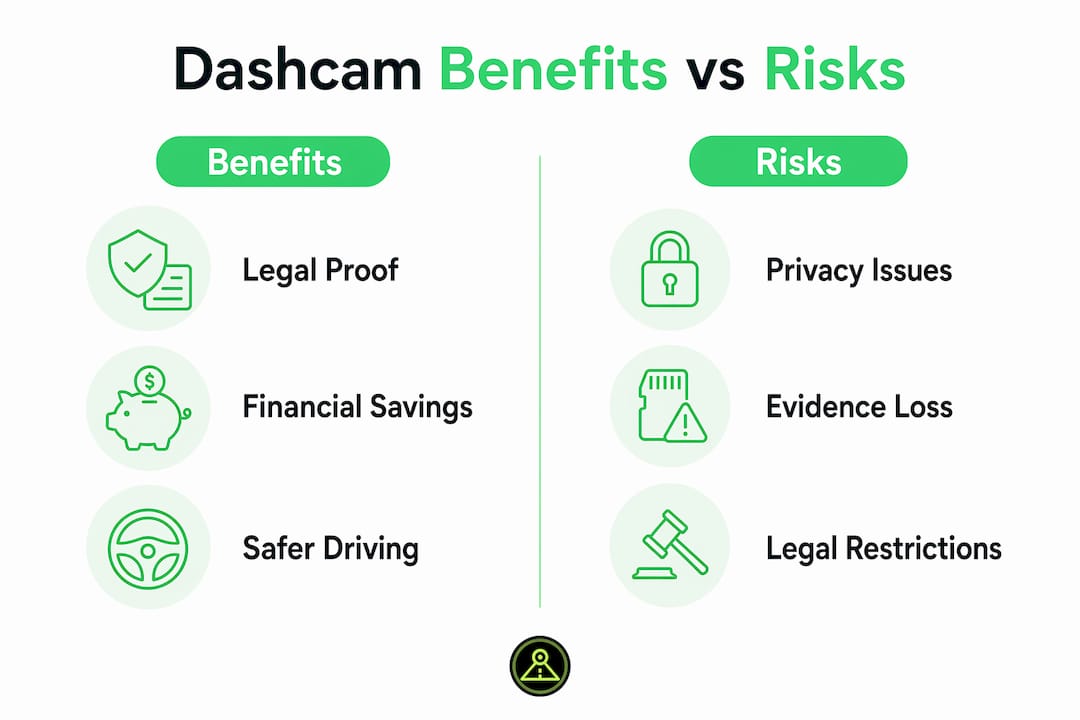
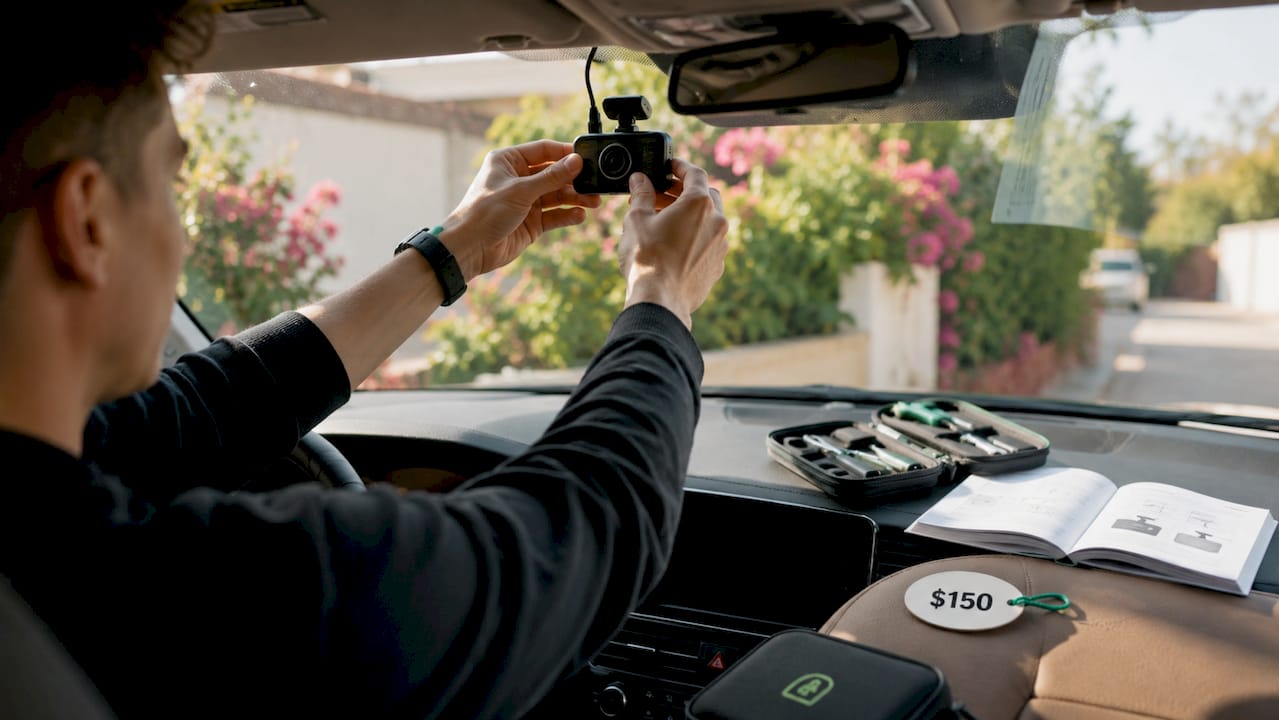
The financial case for dashcams is straightforward. A quality dashcam costs between $50 and $250 and can prevent thousands of dollars in wrongful fault assignments and premium increases over a 3–5 year period. One avoided at-fault claim can easily exceed the device’s total cost within a single policy year.
The financial impact breaks down across three categories:
| Financial Risk | Without a Dashcam | With Dashcam Evidence |
|---|---|---|
| Wrongful fault assignment | Full liability, premium increase | Footage clears fault, no rate change |
| Insurance fraud (crash-for-cash) | Driver absorbs costs | Footage exposes staged accident |
| Hit-and-run damage | No recourse without plate or witness | Plate and vehicle captured on video |
| Legal dispute costs | Attorney fees, court costs | Faster settlement, reduced legal exposure |
Some insurance carriers in the U.S. and U.K. offer premium discounts for verified dashcam users. The discount varies by carrier and is not universally available, but the trend is growing as insurers recognize that dashcam owners file fewer disputed claims. Commuters who drive high-mileage routes, such as daily highway commutes or urban stop-and-go traffic, face the highest exposure to fraudulent and at-fault incidents. For those drivers, the financial protection is not theoretical. It is a near-certainty over a multi-year commuting period. Drivers in commercial roles can find additional context on cost reduction in this analysis of how dashcams cut insurance premiums.
How dashcams promote safer driving and commuter accountability
Dashcams change driver behavior before any incident occurs. The effect is called the monitoring effect: drivers who know their actions are being recorded drive more carefully, maintain safer following distances, and avoid aggressive maneuvers.
“Dashcam use fosters accountability, deterring risky behavior and leading to fewer at-fault traffic incidents in fleets and commuting drivers. The monitoring effect applies whether the driver is aware of the recording or simply knows the device is present.”
Dash Cam Use Rising: 30% of U.S. Drivers Now Record Trips
Fleet operators and rideshare companies have documented this effect across large driver populations. Reduced at-fault incidents translate directly into lower insurance costs and fewer operational disruptions. For individual commuters, the benefit is the same at a smaller scale. Knowing the camera is running discourages the split-second decisions, like tailgating or running a yellow light, that cause most preventable crashes. Parents monitoring new drivers and employers overseeing commercial vehicles use dashcam footage for coaching and accountability. The behavioral impact of fleet dashcams on reckless driving is well-documented and applies equally to solo commuters.
Key Takeaways
Dashcam evidence protects commuters legally and financially by providing objective, timestamped video that courts accept when footage is original, lawfully recorded, and properly preserved.
| Point | Details |
|---|---|
| Admissibility requires three standards | Footage must be relevant, authenticated, and lawfully recorded to hold up in court. |
| Audio recording carries legal risk | Two-party consent states like Florida and Illinois can exclude audio and impose criminal penalties. |
| Preserve originals immediately | Remove the SD card after an incident and avoid editing or sharing footage before legal review. |
| Financial protection is concrete | A $50–$250 dashcam can prevent thousands in wrongful fault costs over a 3–5 year period. |
| Monitoring effect reduces crashes | Drivers with dashcams behave more cautiously, lowering the likelihood of at-fault incidents. |
The case for dashcam evidence is stronger than most commuters realize
We have reviewed a significant number of traffic claim cases and legal rulings involving dashcam footage, and one pattern stands out consistently: the drivers who lose are almost never the ones with bad footage. They are the ones who handled the footage incorrectly after the fact.
The conventional wisdom treats dashcams as a passive safety net. You mount it, forget it, and hope you never need it. That framing is wrong. A dashcam is an active legal instrument, and it requires the same care as any other piece of evidence. Deleting a clip because it “doesn’t show much” is spoliation. Sharing raw footage with an insurer before an attorney reviews it for comparative fault is a strategic error. These are not edge cases. They are the most common reasons dashcam evidence fails in practice.
The other underappreciated point is behavioral. Most commuters think about dashcams in terms of what happens after a crash. The more significant benefit is what the camera prevents. Drivers who know they are being recorded make better decisions. That is not a soft benefit. It is a measurable reduction in crash likelihood, and it compounds over years of daily commuting.
Our honest recommendation: treat your dashcam footage the way you would treat a signed contract. Preserve it, do not alter it, and get professional eyes on it before you use it. The camera tells the truth. Your job is to make sure that truth reaches the right people in the right form.
— Cyberlab Automation
DriveSight makes dashcam evidence simple for daily commuters
Commuters who want reliable evidence capture without buying dedicated hardware have a practical option in DriveSight, the free Android app from phonedashcam.com. The app turns any Android phone into a fully functional dashcam with continuous recording, automatic crash save triggered by accelerometer-based impact sensing, and cloud backup that preserves footage before the loop overwrites it.
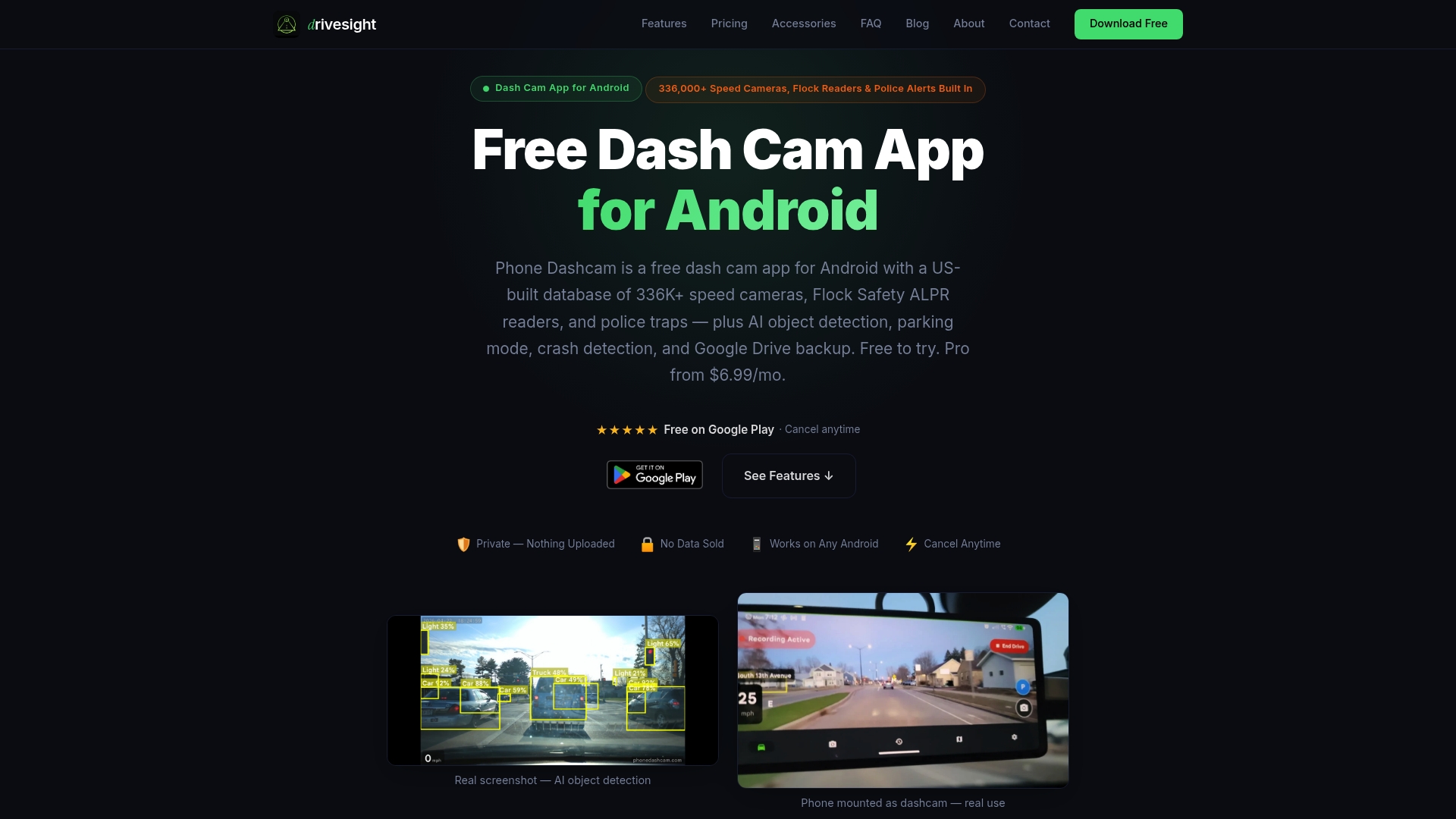
DriveSight also includes a parking security mode that records motion-triggered events while your vehicle is unattended, which is critical for hit-and-run and parking lot damage scenarios. Footage is stored with intact metadata, keeping it compliant with the best evidence rule. For commuters who want to understand how the accident repair process intersects with insurance claims, having pre-existing dashcam footage already in cloud storage removes one of the most common friction points. Download DriveSight free and start recording your next commute with evidence-grade footage from the phone already in your cupholder.
FAQ
Is dashcam footage admissible in U.S. courts?
Yes. Dashcam footage is admissible in most U.S. courts when it is relevant to the case, authenticated as unaltered, and recorded in compliance with state privacy laws.
Can dashcam audio recording get me in legal trouble?
Yes, in two-party consent states. Florida and Illinois require all parties to consent to audio recording, and violating these laws can result in criminal charges and evidence exclusion.
What happens if I delete dashcam footage after an accident?
Deleting or altering footage after an incident can trigger spoliation of evidence claims, which may result in court sanctions or a dismissed case. Preserve all footage immediately and consult an attorney before taking any action.
How much can a dashcam save me financially?
A dashcam costing $50–$250 can prevent thousands of dollars in wrongful fault assignments and premium increases over a 3–5 year period, particularly for commuters who face frequent high-traffic exposure.
Does a dashcam actually make me drive more safely?
Research confirms the monitoring effect: drivers who know they are being recorded make fewer risky decisions, which reduces at-fault incidents over time for both individual commuters and commercial fleets.
Recommended
- Why Dashcam Footage Proves Fault in Parking Lots
- Dashcam Footage Privacy on Public Roads: 2026 Guide
- Dashcam Role in Solo Road Trip Safety: 2026 Guide
- Dashcam Evidence Collection Examples That Win Claims
Get Phone Dashcam free
Loop recording, crash detection, GPS tracking, and AI object detection — all in your phone. No new hardware required.
Download Phone Dashcam