How Dashcams Cut Trucking Insurance Premiums
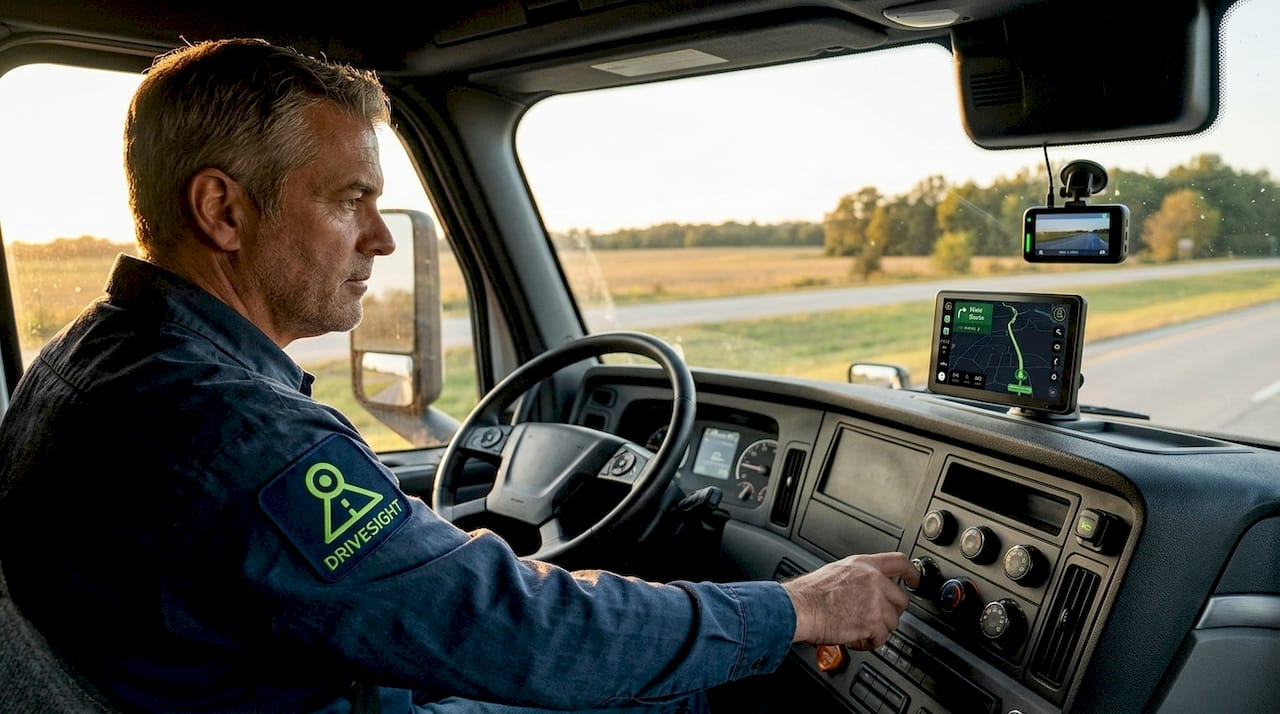
Dashcam technology reduces trucking insurance premiums by giving insurers verifiable proof of safe driving behavior, which directly lowers your fleet’s perceived risk profile. Video telematics, the industry term for integrated camera and GPS data systems, transforms raw footage into underwriting evidence that moves your fleet out of class-average pricing and into preferred-risk status. Telematics-equipped fleets achieve 15 to 30% premium reductions in their first year, with claim costs dropping up to 40%. For a fleet manager watching insurance costs consume an ever-larger share of operating budgets, that math is worth understanding in detail.
How dashcam footage reduces accident claims and insurance costs
The core mechanism behind dashcam insurance savings is straightforward: video evidence eliminates ambiguity in fault determination. When a dispute arises, insurers no longer rely on conflicting driver statements. They review footage. That shift alone accelerates claim resolution and reduces the inflated settlements that come from “he said, she said” standoffs.
The numbers behind this are significant. AI-equipped dashcam fleets see a 38% accident reduction, which directly shrinks claim volume. Fewer claims mean lower loss ratios, and lower loss ratios translate to better renewal pricing. Insurers price risk based on demonstrated history, so a fleet with two years of clean telematics data carries a fundamentally different risk profile than one relying on self-reported safety records.
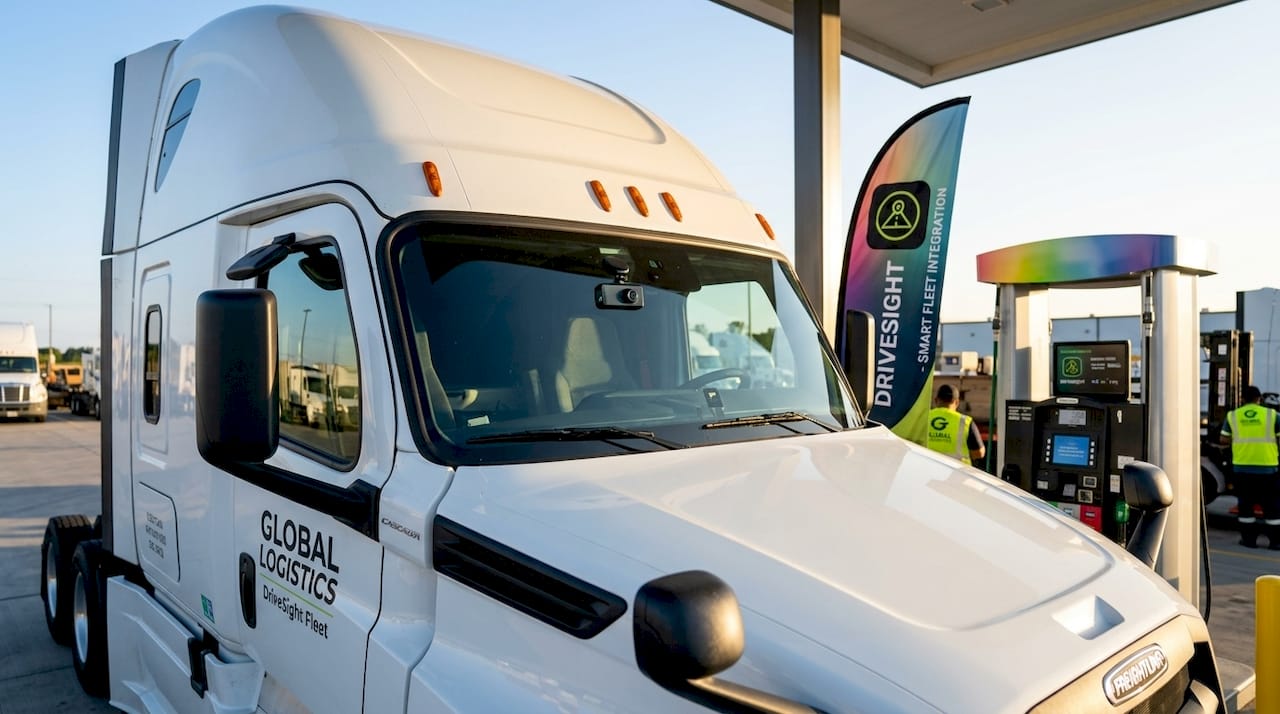
Consider a concrete example. A 100-truck fleet spending $1.3 million annually on insurance can save approximately $260,000 per year through telematics adoption, against a hardware investment of $60,000 to $120,000. That is a 2 to 4x return on investment, and it compounds as the safety record builds. The dashcam benefits for trucking extend beyond premium reductions too. Faster claim resolution reduces administrative overhead, legal exposure, and driver downtime.
Fraudulent claims represent another major cost driver in commercial trucking. Staged accidents and exaggerated injury claims are disproportionately targeted at large trucks because settlements tend to be larger. Dashcam footage shuts down fraudulent claims before they escalate, protecting both your premium history and your legal standing. Reviewing fleet dashcam evidence best practices before an incident occurs puts your operation in a much stronger position.
What insurance discounts reward dashcam-equipped fleets
Insurers offer several distinct discount structures for fleets that adopt dashcam and telematics technology. Understanding which model applies to your insurer determines how aggressively you can reduce trucking insurance costs.
- Hardware or activation discounts. Many insurers provide upfront premium reductions of up to 20% simply for installing approved dashcam hardware and enrolling in their telematics program. This discount applies before any driving data is collected.
- Usage-based insurance (UBI). UBI programs adjust your premiums based on actual miles driven and measured driver behavior rather than class averages. Verizon Connect notes that UBI shifts pricing from broad industry risk pools to your fleet’s specific risk profile, which rewards genuinely safer operators.
- Behavior-based discounts. After a monitoring period, typically 90 days, insurers analyze hard braking events, speeding incidents, and following distance data to assign a safety score. Fleets scoring in the top tiers can see total premium reductions of 5% to 35%.
- Partner program pricing. Some insurers maintain formal telematics partnerships with hardware vendors, offering pre-negotiated rates for enrolled fleets.
The comparison below illustrates how these models differ in timing and requirements:
| Discount type | When it applies | Data required |
|---|---|---|
| Hardware activation | At enrollment | Camera installation confirmation |
| Usage-based insurance | Ongoing, per policy term | Miles driven, GPS route data |
| Behavior-based scoring | After 90-day monitoring period | Speed, braking, following distance |
| Partner program pricing | At policy inception | Enrollment in approved vendor program |
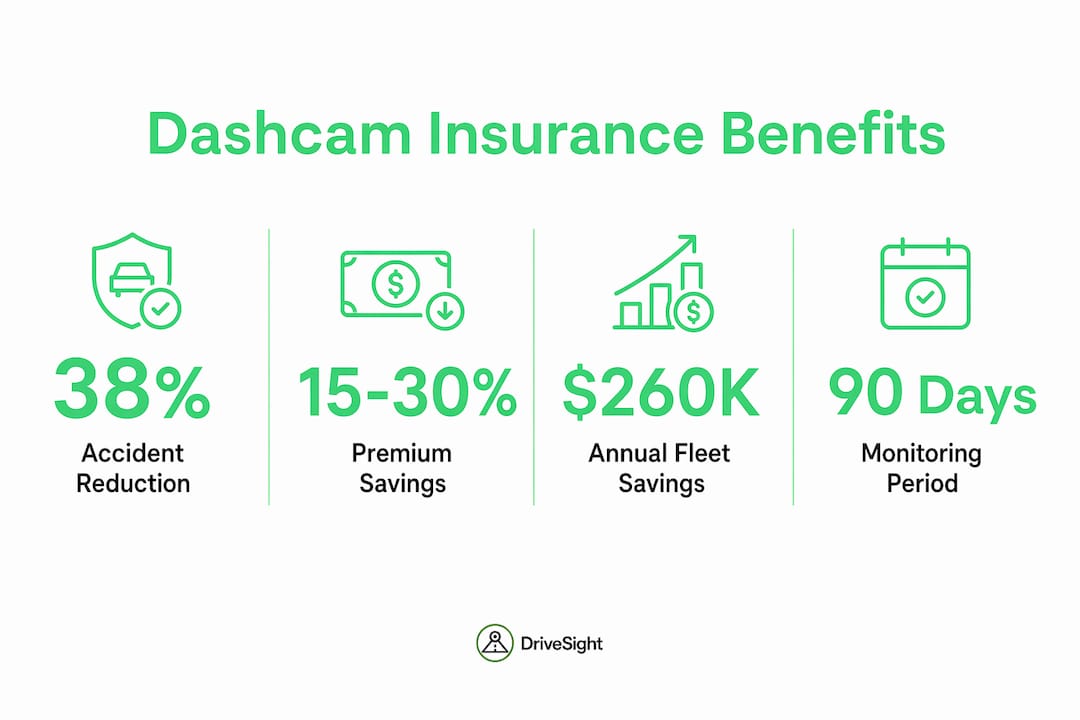
One critical point: discount eligibility requires active program enrollment and a measurable safe-driving period. Installing cameras without notifying your insurer or enrolling in their telematics program produces no discount. The hardware alone does not trigger savings. Your insurer needs to see the data.
What are the risks of dashcam footage in insurance claims?
Dashcam footage is not automatically favorable to your fleet. Footage that captures driver negligence, distracted driving, or a traffic violation can be used against you in a claim or litigation. Total Insurance Pro warns that footage misuse can lead to claim denial or higher renewal rates. This is the risk most fleet managers underestimate when they first deploy cameras.
Key risks to manage include:
- Driver fault exposure. If your driver ran a red light or was following too closely before an incident, the footage documents it. Insurers and opposing counsel will request that footage in discovery.
- Incomplete recordings. Missing or incomplete footage complicates claims, potentially extending resolution time and increasing costs. A gap in recording at the moment of impact raises questions you cannot answer.
- Privacy and consent laws. In-cab audio recording is subject to state wiretapping statutes. California, Illinois, and several other states require two-party consent for audio capture. Violating these laws can make footage inadmissible and expose your fleet to separate liability.
- Unmanaged footage access. Providing blanket access to all recorded footage during a claim investigation can surface unrelated incidents that complicate your legal position.
Pro Tip: Work with your legal counsel to draft a written dashcam policy before deployment. Define retention periods, access protocols, and which footage gets shared with insurers versus held for legal review. A policy document also demonstrates operational discipline to underwriters.
Best practices to maximize dashcam insurance savings
Getting the maximum truck insurance discount from dashcams requires deliberate deployment, not just hardware installation. These steps move you from passive recording to active premium reduction.
- Enroll proactively in your insurer’s telematics program. Contact your broker or carrier before installation to confirm which hardware and data formats qualify. Some programs require specific approved vendors.
- Select cameras with GPS, multi-angle coverage, and cloud storage. 360-degree coverage and in-cab monitors improve incident documentation and prevent side-swipe disputes. GPS data corroborates speed and location claims independently of footage.
- Implement continuous recording with automatic incident save. Gaps in footage undermine your position in disputes. Set cameras to overwrite oldest footage automatically and trigger locked saves on hard braking or impact events.
- Share relevant footage selectively. Provide insurers with incident-specific clips rather than open access to all recordings. This protects your fleet from unrelated footage being used out of context.
- Train drivers on camera presence and purpose. Drivers who understand that footage protects them from false claims are more likely to support the program. Resistance drops when the benefit is framed correctly.
Pro Tip: Pair dashcam data with a vehicle maintenance checklist to build a documented safety culture. Insurers assess both technology adoption and operational discipline when pricing commercial fleets.
GPS integration strengthens every aspect of the insurance case. Speed data, route history, and location timestamps corroborate footage and close gaps that opposing counsel might otherwise exploit. The role of GPS in dashcam systems is particularly valuable when footage quality is disputed or camera angles are incomplete.
Key takeaways
Dashcams reduce trucking insurance premiums by converting driving behavior into verifiable risk data that insurers use to price fleets below class averages, but savings require active program enrollment and disciplined footage management.
| Point | Details |
|---|---|
| Premium reduction range | Telematics-equipped fleets achieve 15 to 30% lower premiums in year one. |
| Enrollment is required | Installing cameras without insurer program enrollment produces no discount. |
| Footage carries legal risk | Footage showing driver fault can be used against your fleet in claims. |
| Multi-angle coverage matters | GPS and 360-degree cameras strengthen incident documentation and dispute defense. |
| ROI is measurable | A 100-truck fleet can save $260,000 annually against a $60,000 to $120,000 investment. |
Why dashcams are the most underused cost lever in fleet insurance
We have worked with fleet operators who spent years absorbing premium increases while their safety records quietly improved. The gap between what their data showed and what their insurer charged came down to one thing: the insurer could not see the data. Dashcams close that gap. They make your safety-driven culture visible to underwriters who otherwise price you against the industry average.
The fleets getting the best results are not just installing cameras. They are treating dashcam data as an ongoing underwriting argument. Every clean quarter of telematics data is a negotiating asset at renewal. AI analytics are accelerating this trend, with insurers increasingly using machine learning to assess real-time risk rather than annual loss history. Fleets that build this data record now will have a structural pricing advantage over those that wait.
The one caution we would add: deploy with a legal and policy framework in place. The footage that protects you in one claim can complicate another if access is unmanaged. Get the policy right before the first camera goes live.
— Cyberlab Automation
Start protecting your fleet with DriveSight
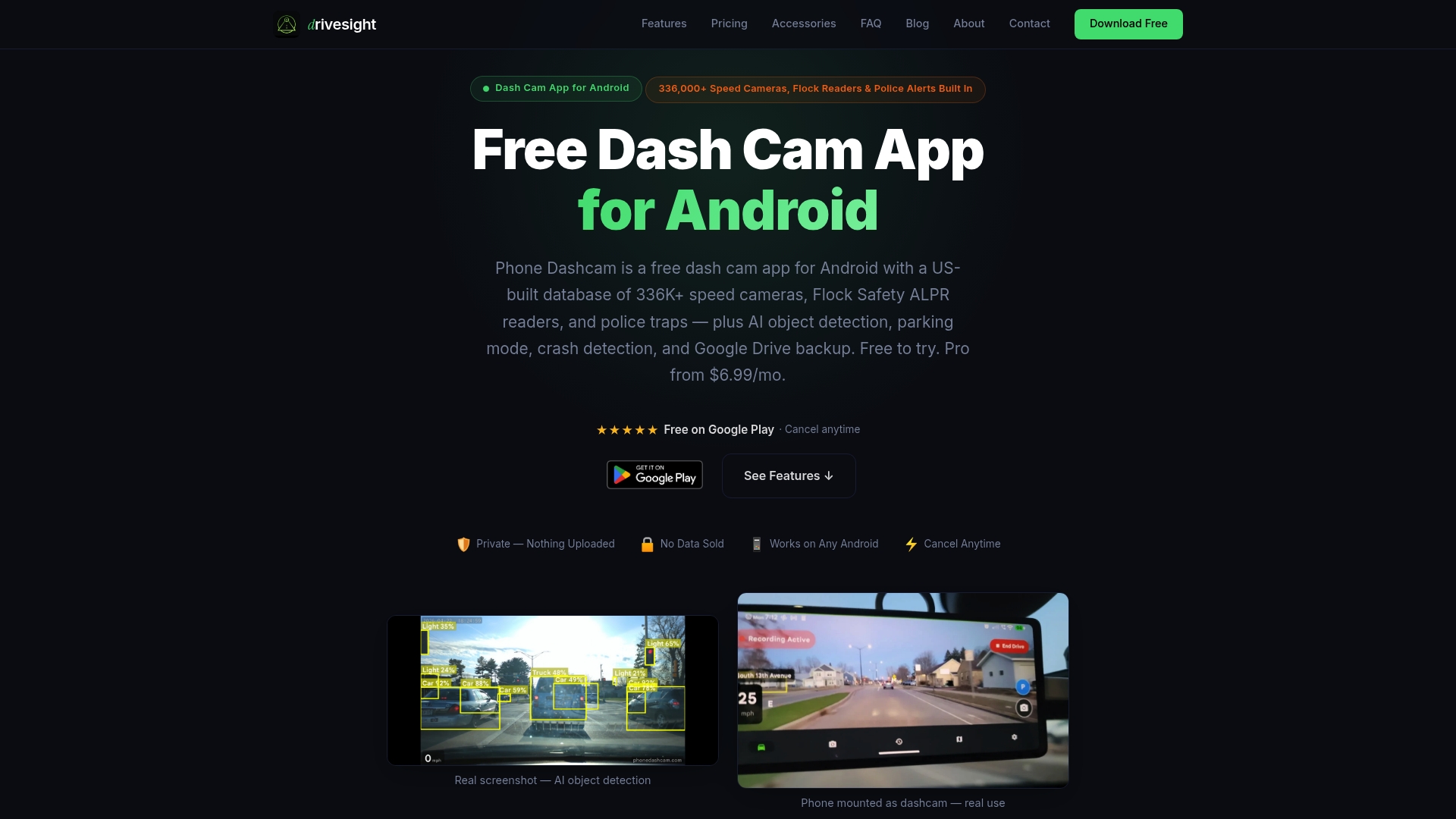
DriveSight’s free Android dashcam app gives fleet operators an accessible entry point into video telematics without dedicated hardware costs. The app features accelerometer-based crash detection, automatic incident save, cloud backup, and GPS integration, capturing the evidence that insurers and legal teams need to resolve disputes quickly. For fleets evaluating dashcam technology before committing to hardware, DriveSight lets you repurpose existing Android devices into fully functional recording units. Explore the DriveSight dashcam app to see how it fits your fleet’s safety and insurance documentation needs.
FAQ
How much can dashcams lower trucking insurance premiums?
Telematics-equipped fleets typically achieve 15 to 30% premium reductions in the first year, with some behavior-based programs offering up to 35% off for top-scoring fleets.
Does installing a dashcam automatically reduce my insurance rate?
No. Most insurers require active enrollment in a telematics or UBI program and a monitoring period, often 90 days, before discounts apply.
Can dashcam footage be used against my fleet in a claim?
Yes. Footage that captures driver negligence, speeding, or a traffic violation can be used by opposing counsel or your insurer to assign fault and affect your claim outcome.
What dashcam features matter most for insurance purposes?
GPS integration, multi-angle coverage, cloud storage, and automatic incident save are the features that most directly support insurance documentation and dispute resolution.
How does dashcam footage help resolve truck insurance disputes?
Video evidence eliminates conflicting driver accounts, speeds fault determination, and reduces the inflated settlements that result from unresolved liability disputes.
Recommended
- Why fleet dashcams deter reckless driving effectively
- Why Every Trucker Needs a Dashcam at Weigh Stations
- Dashcam Cloud Storage for Fleet Management in 2026
- Phone Dashcams Are Not What You Think — Why They Actually Work Now in 2026
Get Phone Dashcam free
Loop recording, crash detection, GPS tracking, and AI object detection — all in your phone. No new hardware required.
Download Phone Dashcam