Remote Vehicle Viewing App Benefits for Safety in 2026
Remote Vehicle Viewing App Benefits for Safety in 2026

TL;DR:
- Remote vehicle viewing apps enable real-time monitoring and control of vehicles using smartphones. They help improve security, reduce accidents, and provide legally sound evidence collection. Proper configuration and legal compliance are essential for maximizing safety, legal admissibility, and cost savings.
Remote vehicle viewing apps are defined as mobile software that lets you monitor, control, and record your vehicle in real time from a smartphone. The core remote vehicle viewing app benefits include live surveillance, automated incident alerts, driver behavior tracking, and legally admissible evidence collection. DriveSight, for example, transforms an Android phone into a full dashcam with AI-powered detection, motion alerts, crash detection, and a database of over 336,000 speed cameras and police traps worldwide. These capabilities put vehicle security directly in your hands, whether your car sits in a parking lot or moves through city traffic.
1. What are the main safety and security benefits of remote vehicle viewing apps?
Remote vehicle viewing apps give you active control over your vehicle’s security, not just passive recording. Most apps support remote lock and unlock, horn activation, and in some cases remote engine start, so you can respond to a threat without being physically present. Live video monitoring means you see what is happening at your vehicle the moment an alert fires.

AI-based alert filtering is the feature that separates useful apps from noisy ones. AI filters authorized movements and delivers verified alerts to you instead of flooding your phone with false positives. That accuracy matters because alert fatigue causes users to ignore notifications entirely, which defeats the purpose of monitoring.
Driver behavior monitoring adds another layer of protection. Remote monitoring correlates with 22% fewer minor accidents in urban fleet environments. Fewer accidents mean lower repair bills and reduced insurance premiums over time.
Key safety features to look for in a vehicle monitoring app:
- Live video feed accessible from any location with a data connection
- Motion detection alerts that trigger recording when someone approaches the vehicle
- Accelerometer-based impact sensing that saves footage automatically after a collision
- AI object detection to distinguish people, vehicles, and animals from wind or shadows
- Remote lock, unlock, and horn controls for immediate response
Pro Tip: Set your motion detection sensitivity to medium rather than maximum. High sensitivity in a busy parking lot generates constant alerts, while medium catches genuine threats without overwhelming you.
2. How remote vehicle apps assist with legal evidence and incident documentation
Video footage is only useful in court if it was captured and stored correctly. The pros of automotive viewing software extend well beyond recording. They include the entire chain of custody from the moment an event occurs to the moment footage appears before a judge.
Sharing footage through messaging apps breaks the chain of custody and can make that evidence inadmissible. This is one of the most common and costly mistakes vehicle owners make after an incident. A screenshot sent via text has no verifiable origin, no timestamp integrity, and no audit trail.
Cloud-based platforms solve this problem by keeping video inside a secured system throughout the entire investigation. Video that never leaves the platform retains a full audit trail and digital fingerprints that courts recognize. Cryptographic hashing and timestamps applied at the moment of capture prove the footage has not been altered.
“Modern digital evidence platforms ensure evidence integrity by applying comprehensive audit logs and encryption, setting new legal standards. Cloud-based platforms provide extended retention, advanced internal collaboration tools, and time-bound encrypted sharing links to maintain an unbroken digital chain of custody essential for court use.”
Telematics data strengthens footage even further. GPS routing, speed data, and AI camera feeds create immutable digital trails that prove vehicle conditions and driver behavior before a crash occurred. Insurance adjusters and attorneys rely on this combination of video and data to establish fault quickly.
Best practices for legally sound evidence handling:
- Store footage on a secure cloud platform rather than transferring it manually
- Never share raw video files through social media or messaging apps
- Apply timestamps and GPS coordinates at the point of capture
- Use apps that generate automatic incident reports with metadata intact
- Review your local laws on dashcam footage privacy before recording audio
3. What cost savings and operational advantages do vehicle monitoring apps provide?
The financial case for vehicle monitoring apps is backed by fleet data that individual vehicle owners can apply directly to their own situations. Fleet management with remote monitoring reduces fuel use by 20–30% and cuts operational costs by up to 25%. Those numbers come from companies tracking dozens of vehicles, but the same principles apply to a single car owner monitoring idle time and route efficiency.
Accident reduction is where the savings become most visible. Fewer collisions mean fewer repair bills, lower deductibles, and better insurance rates over time. Driver safety improves substantially when apps integrate behavior monitoring with immediate feedback, because drivers correct habits faster when they know their performance is visible.
For ride-share operators and delivery drivers, real-time data access removes guesswork from route planning and vehicle maintenance scheduling. Knowing your vehicle’s status remotely means you catch problems before they become expensive repairs. Pairing a vehicle monitoring app with a multi-vehicle service plan creates a data-driven maintenance cycle that extends vehicle life.
| Benefit | Impact |
|---|---|
| Fuel monitoring | 20–30% reduction in fuel consumption |
| Accident reduction | 22% fewer minor accidents with behavior monitoring |
| Operational cost savings | Up to 25% cost reduction reported by fleet operators |
| Insurance premiums | Lower rates tied to documented safe driving behavior |
| Maintenance planning | Early fault detection reduces unplanned repair costs |
Pro Tip: If you drive for a ride-share platform, document your driving behavior with a monitoring app for at least 90 days before requesting an insurance review. Consistent safe-driving data gives your insurer concrete grounds to lower your premium.
4. What technical and practical considerations should users know?
Understanding the real-world constraints of vehicle monitoring apps prevents frustration and protects your investment. The advantages of vehicle monitoring apps are real, but they come with hardware and legal requirements you need to plan for.
Continuous live remote viewing drains a vehicle’s battery significantly. Long monitoring sessions require a charging strategy, whether that means a hardwired power connection, a parking mode power pack, or scheduled monitoring windows instead of continuous streaming. Remote viewing is power intensive, and ignoring this constraint leads to a dead battery at the worst possible moment.
Legal compliance is equally non-negotiable. Video evidence can be ruled inadmissible if audio recording laws are not followed. Most U.S. states require at least one-party consent for audio recording, but some require all-party consent. Recording audio without checking your local wiretap laws puts your footage at legal risk before it ever reaches an insurer or courtroom.
Practical considerations before you start monitoring:
- Connectivity: Live viewing requires a stable mobile data connection on both the vehicle’s phone and your remote device
- Storage: Plan your Android dashcam storage strategy before you run out of space during an incident
- Power management: Use a hardwired USB connection or a dedicated power bank for parking mode monitoring
- Audio recording laws: Check your state’s consent requirements before enabling audio capture
- AI filtering settings: Configure sensitivity thresholds to match your environment, whether that is a quiet driveway or a busy urban lot
- App permissions: Grant only the permissions the app needs. Camera, location, and storage access are standard; anything beyond that warrants scrutiny
DriveSight addresses several of these constraints directly. On-device processing keeps data local by default, and the app supports background running so your phone sitting in the cupholder keeps recording without the screen staying on.
Key takeaways
Remote vehicle viewing apps deliver measurable safety, legal, and financial benefits when configured correctly and used within applicable laws.
| Point | Details |
|---|---|
| AI filtering reduces false alarms | Configure sensitivity to match your environment so you receive verified, useful alerts. |
| Chain of custody determines admissibility | Store footage on a secure platform and never share raw files through messaging apps. |
| Monitoring cuts accident rates | Behavior monitoring correlates with 22% fewer minor accidents, lowering repair and insurance costs. |
| Power management is non-negotiable | Plan a charging strategy before enabling continuous live monitoring to avoid dead batteries. |
| Audio laws vary by state | Check local consent requirements before recording audio to keep footage legally admissible. |
What I’ve learned after years of working with vehicle monitoring technology
The biggest mistake users make is treating a monitoring app as a set-and-forget solution. They install it, leave it running, and assume the footage will be there when they need it. Then an incident happens, and they discover the battery died overnight, the storage filled up three days ago, or the footage was shared incorrectly and is now inadmissible.
The apps that actually protect you are the ones you configure deliberately. That means setting up power management before your first overnight session, testing your cloud backup before you need it in an emergency, and reading your state’s recording consent laws before you enable audio. These are not complicated steps. They take 30 minutes once, and they determine whether your footage helps you or fails you.
The other thing worth saying plainly: AI filtering is not optional anymore. An app that sends you 200 motion alerts per day in a busy parking lot trains you to ignore all of them. AI-driven verification, the kind that distinguishes a person approaching your car from a shopping cart rolling past, is what makes monitoring actually useful rather than just technically present.
The future of vehicle monitoring is tighter integration between dashcam footage, telematics data, and cloud evidence platforms. That combination creates a legal record that is far harder to dispute than video alone. Drivers who build that system now will be better positioned for insurance disputes, legal proceedings, and simple peace of mind.
— Cyberlab Automation
DriveSight: vehicle monitoring built for real-world use
DriveSight turns your Android phone into a full vehicle monitoring system without requiring any hardware beyond the phone you already own.
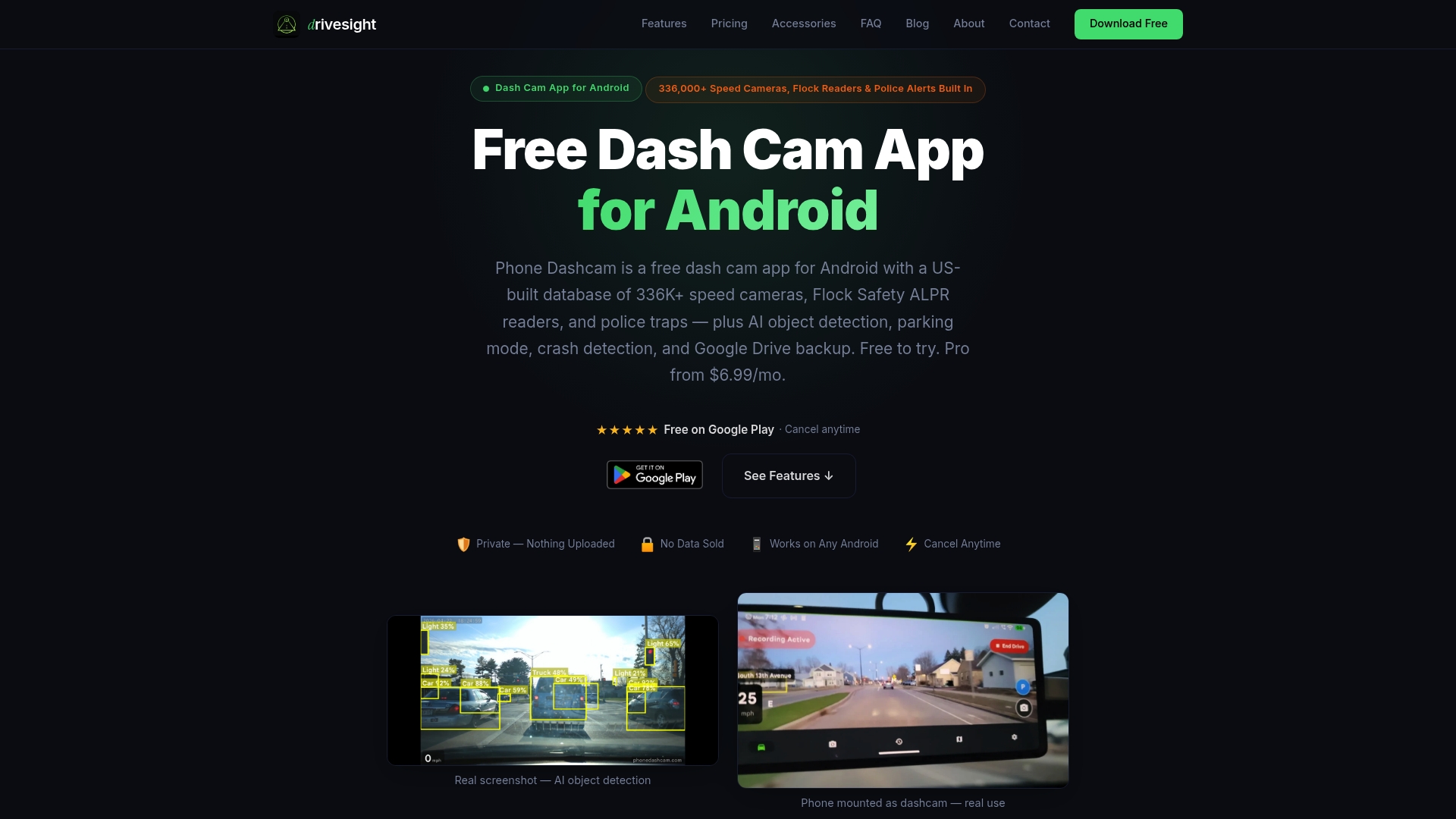
The Phone Dashcam remote viewer gives you live access to your vehicle’s camera feed from anywhere, paired with motion detection alerts and automatic crash saves that preserve footage the moment an impact occurs. DriveSight’s AI-powered detection filters out false alarms so you receive alerts that actually matter. The app also draws on a database of over 336,000 speed cameras, red light cameras, and police traps worldwide to keep you informed while driving. For users who want to understand how parking security works without dedicated hardware, the parking surveillance guide covers the full setup process. Download DriveSight free at phonedashcam.com and start monitoring today.
FAQ
What are the main benefits of a remote vehicle viewing app?
Remote vehicle viewing apps provide live surveillance, motion detection alerts, crash detection, and secure evidence recording from a smartphone. The core benefits include real-time security monitoring, driver behavior tracking, and legally admissible footage capture.
How do remote vehicle apps help with insurance claims?
Apps that store footage on a secure cloud platform with timestamps and GPS data create an unbroken chain of custody that insurers and courts recognize. Sharing footage through messaging apps breaks that chain and can make evidence inadmissible.
Do remote vehicle viewing apps drain the car battery?
Yes. Continuous live monitoring is power intensive and requires a charging strategy such as a hardwired USB connection or a dedicated power bank during extended parking sessions.
Is it legal to record audio with a vehicle monitoring app?
Audio recording admissibility depends on local consent laws. Most U.S. states require one-party consent, but some require all-party consent. Check your state’s wiretap regulations before enabling audio capture.
Can a single vehicle owner benefit from monitoring apps, or are they only for fleets?
Individual vehicle owners benefit directly. The same fuel monitoring, accident reduction, and evidence collection features that fleet operators use to cut costs by up to 25% apply to a single vehicle, especially for ride-share drivers, delivery operators, and commuters who park in high-risk areas.
Recommended
- Dashcam Cloud Storage for Fleet Management in 2026
- Top 5 Android Authority Alternatives 2026
- Top 6 ALPR Alert Apps for Fleet Operators 2026
- Why fleet dashcams deter reckless driving effectively
Get Phone Dashcam free
Loop recording, crash detection, GPS tracking, and AI object detection — all in your phone. No new hardware required.
Download Phone Dashcam