Truckers and Weigh Stations: Why a Dashcam Belongs in the Cab
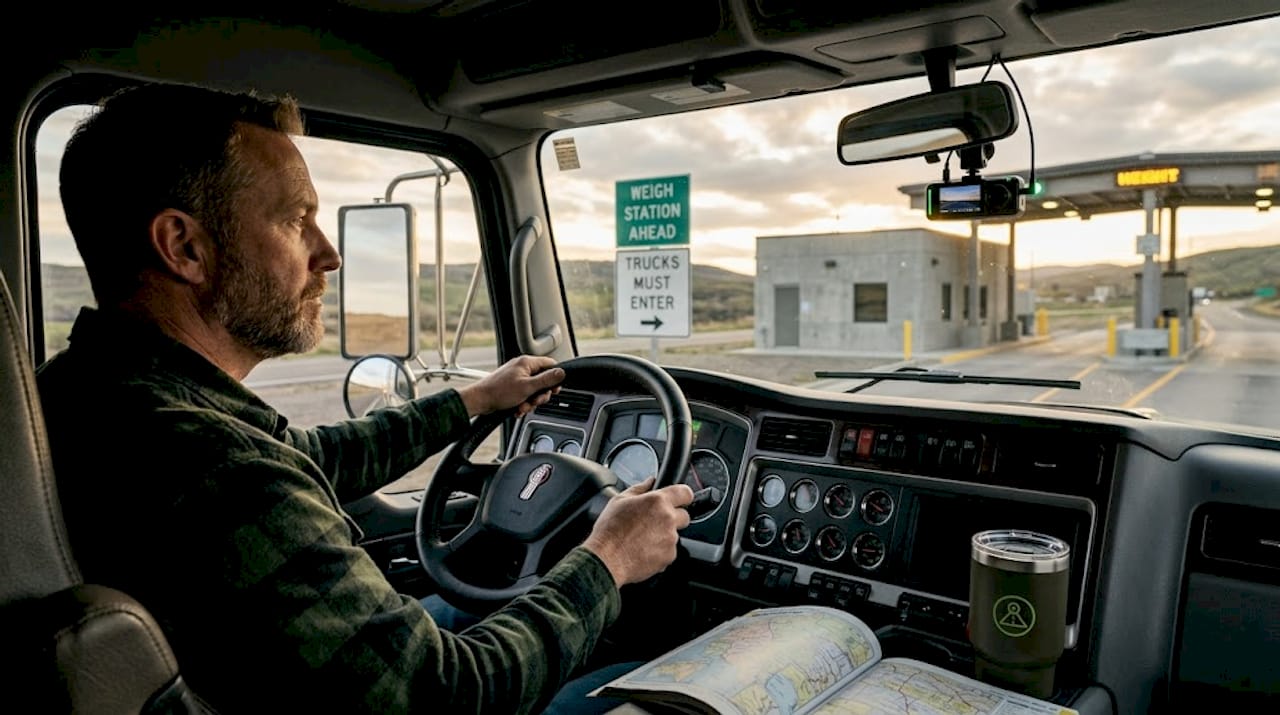
Weigh stations are not the simple compliance stops many drivers assume them to be. For professional truckers, understanding why a trucker needs a dashcam at weigh stations can be the difference between a clean record and a costly violation, a dismissed claim and an expensive lawsuit. Between false weight readings, staged incident schemes, and inspection disputes with no neutral witness, the risks are real and financially significant. This article covers exactly what happens at weigh stations that puts drivers at risk, what dashcam features actually matter, and how to use footage strategically to protect your career and your fleet.
Table of Contents
- Key takeaways
- Why truckers need dashcams at weigh stations
- Dashcam benefits at weigh stations: safety and dispute resolution
- Dashcam features that matter for weigh station use
- Legal considerations for dashcam use at weigh stations
- Practical steps for using dashcams effectively at weigh stations
- My take on dashcams and weigh station protection
- Turn your Android phone into a weigh station defense tool
- FAQ
Key takeaways
| Point | Details |
|---|---|
| Evidence beats memory | Dashcam footage provides objective, timestamped proof when a verbal dispute cannot. |
| Fraud is a documented threat | Staged accident fraud costs trucking $6 billion annually, and weigh stations create predictable slowdown opportunities for fraudsters. |
| Dual-channel recording matters | Front and driver-facing cameras together eliminate gaps in evidence that plaintiff attorneys exploit. |
| Legal compliance is state-specific | Dashcam laws vary significantly by state, especially around audio recording consent. |
| Coaching turns data into safety | Documented coaching interventions reduce lawsuit exposure and measurably lower accident rates. |
Why truckers need dashcams at weigh stations
Weigh stations exist to verify that commercial vehicles comply with federal and state weight limits, confirm valid operating credentials, and allow inspectors to perform safety checks under the FMCSA’s roadside inspection program. On a typical stop, a truck pulls onto the scale, the weight is recorded, and the driver either gets a green light to proceed or is directed into the inspection bay. That sounds straightforward. In practice, it creates several high-risk scenarios that most truckers experience firsthand eventually.
Consider a situation where a scale reads over the legal axle weight, but the driver loaded the trailer correctly and has documentation to support it. Without video evidence of the loading process or a timestamped record of the route, proving the scale result was inaccurate is very difficult. The driver faces a citation, a fine, and a mark on the CSA score that affects future inspections and insurance rates.
Then there is the fraud problem. Weigh stations force trucks to slow down significantly, sometimes to a complete stop. Bad actors know this. Staged incidents at or near weigh station approaches are a documented pattern. Staged accident fraud costs the US trucking industry $6 billion annually, and a dashcam is the primary tool for defeating those claims with irrefutable evidence.
Here are the most common weigh station scenarios where dashcam footage becomes critical:
- Weight discrepancy disputes: A scale gives a reading the driver believes is incorrect, and there is no independent verification of vehicle or cargo conditions at the time.
- Staged near-miss incidents: A vehicle approaching or exiting a weigh station cuts off a truck deliberately, then files a personal injury claim.
- Inspector conduct disputes: Rare but documented situations where the driver believes an inspection was conducted improperly or resulted in damage to the vehicle.
- False violation records: Paperwork errors or data entry mistakes during inspections that end up on the driver’s CSA profile and need to be challenged through the DataQs system.
- Brake and lighting violations: A cited deficiency the driver contests because the equipment was functioning correctly before the stop.
Dashcam benefits at weigh stations: safety and dispute resolution
The core value of a dashcam at a weigh station is objective, time-stamped documentation of everything that happens before, during, and after the stop. That value shows up in three distinct ways.
First, it establishes driver compliance. When you pull into a weigh station and your dashcam is running, you have a continuous record showing your speed on approach, lane behavior, and adherence to posted instructions. GPS and ELD-integrated footage provides timestamped evidence combining location, speed, and driving status at any moment. If an inspector cites you for something that your footage clearly contradicts, that recording becomes your first line of defense.
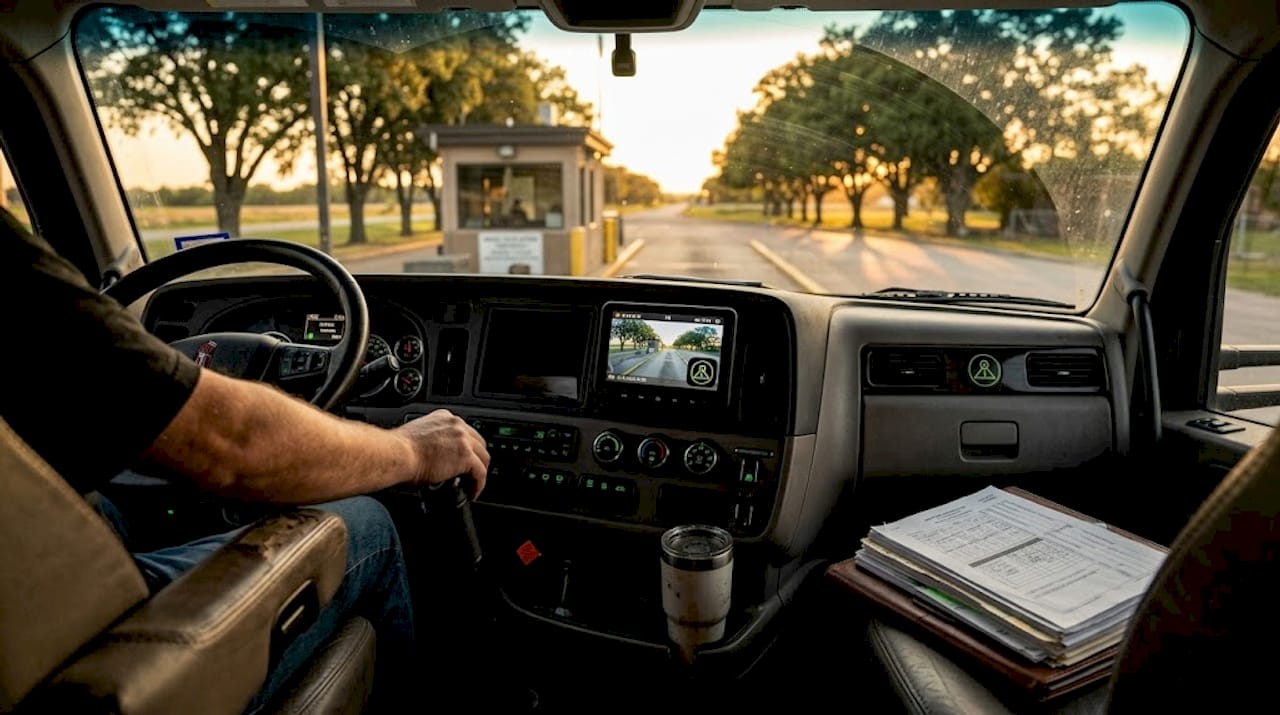
Second, it defeats fraudulent claims. Dual-channel dashcams showing both the road ahead and the cab interior provide the full picture that single-channel cameras cannot. Plaintiff attorneys in staged accident cases specifically target gaps in driver behavior documentation. When your footage shows both the external road event and your calm, attentive response inside the cab, the case against you weakens considerably.
Third, real-time AI alerts reduce the risk of an incident occurring in the first place. Modern dashcam systems can detect hard braking, lane departure, and tailgating and alert the driver immediately. Near weigh station approaches where traffic backs up unpredictably, those alerts give you an extra second of reaction time that matters. AI-based coaching using dashcams reduces preventable accidents by 22% within six months.
Here is a practical sequence for using dashcam data after a weigh station incident:
- Flag and lock the relevant footage immediately after the stop, before loop recording overwrites it.
- Note the exact time and milepost so you can cross-reference with GPS data and ELD logs.
- Export the file to cloud storage within 24 hours to preserve it independently of the device.
- Share the footage with your fleet manager or legal contact before filing any formal response or DataQs challenge.
- Build the evidence package combining the video, GPS coordinates, ELD data, and any inspection paperwork.
Pro Tip: Set your dashcam system to automatically lock and upload footage when the GPS detects entry into a weigh station geofence. Some advanced apps let you define trigger zones so critical moments are never accidentally overwritten.
Dashcam features that matter for weigh station use
Not all dashcams perform equally in a weigh station context. Here is a comparison of the features that make the most practical difference:
| Feature | Why it matters at weigh stations | Minimum standard |
|---|---|---|
| Dual-channel recording | Covers both road events and in-cab driver behavior | Front + driver-facing camera |
| GPS and timestamp overlay | Proves location, speed, and time for regulatory audits | Real-time GPS embedding |
| Cloud backup | Protects footage even if the device is damaged or seized | Automatic upload on event trigger |
| Night vision / low-light clarity | Weigh stations operate 24/7; poor lighting is common | 1080p minimum, f/1.8 aperture or IR |
| AI behavior alerts | Flags risky driving near high-congestion weigh approaches | Hard braking, lane drift, fatigue detection |
| Loop recording with event lock | Prevents overwriting of critical footage | G-sensor or manual lock trigger |
Cloud storage is not optional for serious weigh station protection. If your device is physically damaged in an accident near a weigh station, local storage is gone. Cloud backup means that footage survives regardless of what happens to the hardware.
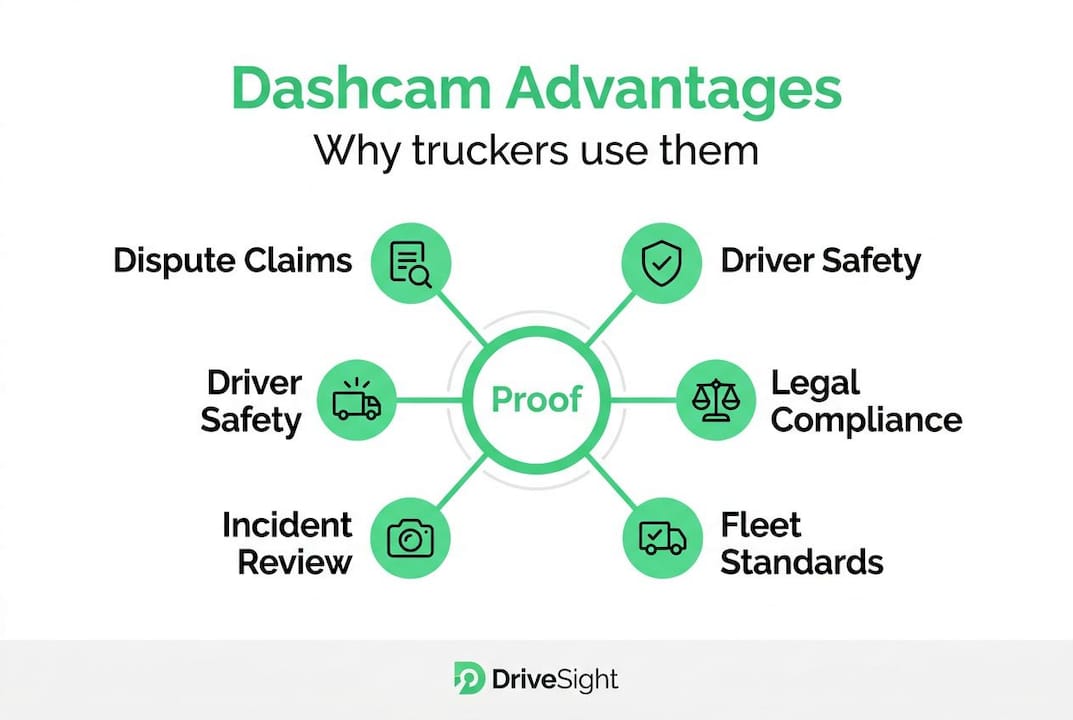
The dual-channel requirement also deserves emphasis. Over 73% of commercial fleets require dashcams to mitigate risk and provide accident evidence, and nearly all Tier 1 carriers have moved to AI-integrated dual-channel setups. If your current setup only covers the road ahead, you are leaving a significant gap in your evidence record.
Legal considerations for dashcam use at weigh stations
Using a dashcam correctly means understanding both what it protects you from and what mismanagement of that footage can expose you to.
State law is the first variable. Audio recording without explicit consent can create legal exposure in two-party consent states. If your dashcam records audio inside the cab during an inspection where a conversation occurs, you may have a problem in states like California, Florida, or Illinois unless you have a clear disclosure policy. Video-only recording is generally permissible in all 50 states when recorded in a commercial vehicle during active operation.
Key legal and privacy practices to follow:
- Maintain a written dashcam policy that all drivers sign, explaining what is recorded, how it is stored, and how it will be used.
- Disable audio recording or display consent notices in states with two-party consent laws.
- Set a data retention schedule tied to your legal obligations. Retaining excess video beyond what regulations require increases your exposure to civil discovery demands.
- Document every coaching intervention triggered by flagged dashcam events. Failure to coach on known safety events can itself become evidence of negligent supervision.
- Apply the same standards fleet-wide. Inconsistent enforcement of dashcam policies is a liability in litigation.
Pro Tip: Work with your fleet’s legal team to define a maximum retention window for standard loop recordings. Most carriers settle on 30 to 60 days for non-incident footage, which limits discovery exposure without deleting potentially useful evidence prematurely.
Understanding the DataQs challenge process is also worth your time here. Successful weigh station violation challenges require comprehensive, vetted evidence packages including dashcam footage and log citations. Filing a challenge without video documentation is significantly less effective than filing with it.
Practical steps for using dashcams effectively at weigh stations
Good equipment is only half the equation. How you use it determines the actual outcome.
- Establish a clear dashcam policy before deployment. Drivers should know exactly what the camera records, who reviews it, and under what circumstances. Clear policies and consistent coaching improve driver engagement and reduce resistance to monitoring.
- Train drivers on footage preservation procedures. Every driver should know how to manually lock footage immediately after a weigh station incident and how to report it to dispatch.
- Integrate dashcam data with your ELD and dispatch system. Real-time alerts and geo-fencing help dispatchers act on potential issues before they escalate.
- Build a DataQs evidence template. When you dispute a weigh station violation, you need a structured package: timestamped video clip, GPS track, ELD log, inspection report copy, and a written driver statement.
- Run quarterly system audits. Verify that cameras are recording correctly, cloud backup is functioning, and all GPS data is syncing accurately. A dashcam that fails silently is worse than no dashcam because you believe you have coverage when you do not.
- Coordinate with your insurance carrier. Many commercial insurers now offer premium reductions for fleets with verified dashcam programs. Share your incident data and coaching records to demonstrate proactive risk management.
My take on dashcams and weigh station protection
I’ve watched this space shift considerably over the past few years. What started as a safety measure is now a core legal defense tool, and the fleets that treat it as the latter are far better positioned than those still thinking of dashcams as a nice-to-have.
The part most fleets get wrong is the data management side. They invest in good hardware, mount it correctly, and then do nothing with the footage until something goes wrong. By then, the most useful evidence, the routine stops, the near-misses, the gradual pattern of behavior before an incident, is often overwritten.
What I’ve found actually works is treating dashcam footage like financial records. Review it regularly, coach on what you find, and document that coaching. That documentation matters as much as the footage itself in litigation. A carrier that identifies a risk on video and does nothing about it is in a worse legal position than a carrier that never recorded at all.
The privacy tension with inward-facing cameras is real, and I think it’s worth taking seriously rather than dismissing. Drivers who feel surveilled without understanding the purpose will find ways to work around the system. Transparent communication about why the footage is used for coaching and legal defense, not performance punishment, changes the relationship entirely. I’ve seen that shift turn skeptical drivers into the program’s strongest advocates.
— Cyberlab
Turn your Android phone into a weigh station defense tool
If you are evaluating dashcam options for your rig or your fleet, the hardware investment is not the only path forward. Phonedashcam transforms an Android smartphone into a fully functional dashcam with AI-powered detection, automatic crash save, cloud backup, and real-time safety alerts covering over 336,000 US-based enforcement points.
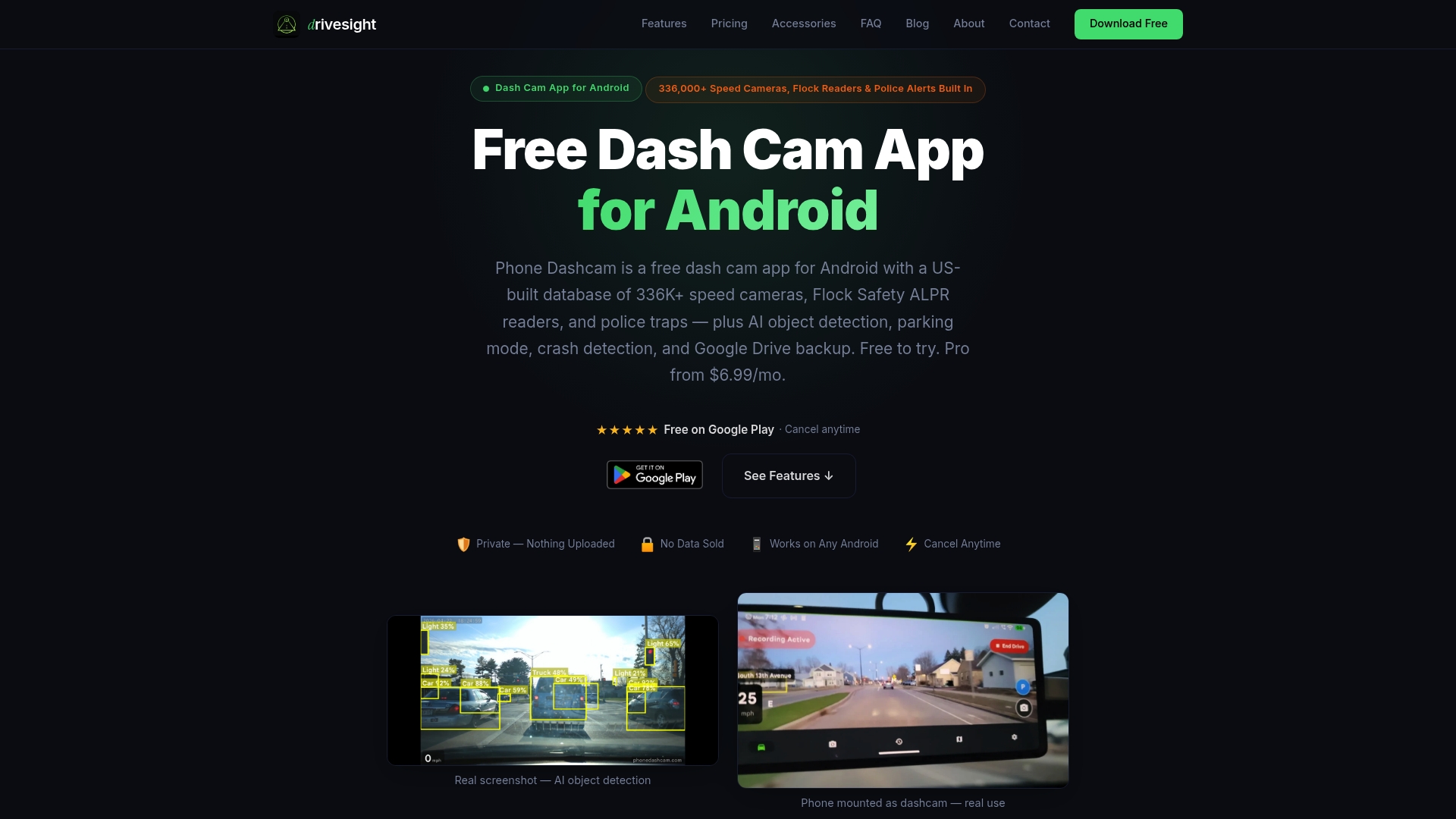
For owner-operators, the free dashcam app means a spare Android phone mounted in the cab becomes a credible evidence tool without buying dedicated hardware. Fleet operators can deploy the app across multiple vehicles, use the remote viewer to access footage from any connected device, and configure geofence-based auto-save triggers for weigh station approaches. The app supports dual front and rear recording to capture both road events and in-cab context in one setup. It is a practical, cost-effective solution built specifically for the kind of evidence collection that weigh station situations demand.
FAQ
Why is dashcam footage important at weigh stations?
Dashcam footage provides timestamped, objective evidence of vehicle behavior, driver conduct, and surrounding conditions during a weigh station stop, which is critical for disputing false violations or defeating fraudulent claims.
Can a dashcam help fight a CSA violation from a weigh station inspection?
Yes. Comprehensive evidence packages including dashcam video, GPS data, and ELD logs are the foundation of successful DataQs challenges against inaccurate weigh station inspection records.
What dashcam features are most useful for truckers at weigh stations?
Dual-channel recording, GPS timestamp overlay, cloud backup, and AI event detection are the most critical features for generating reliable, court-admissible evidence at weigh station stops.
Are dashcams legal to use at weigh stations?
Video recording in a commercial vehicle is legal in all 50 states during active operation, but audio recording consent requirements vary by state and carriers should review applicable state dashcam laws before deployment.
Are dashcams worth it for truckers financially?
Yes. Between insurance premium reductions, reduced litigation costs, and faster resolution of CSA disputes, the financial return on a dashcam investment is well-documented. Fleets using AI dashcams report accident reductions of 20% to 40% within the first year of adoption.
Recommended
- Why fleet dashcams deter reckless driving effectively
- How a Dashcam Protects You During Remote Area Travel
- How dashcams store overnight delivery footage safely
- How to enable dashcam parking mode for commuters
Get Phone Dashcam free
Loop recording, crash detection, GPS tracking, and AI object detection — all in your phone. No new hardware required.
Download Phone Dashcam