Night Driving Dashcam Performance: What You Need to Know
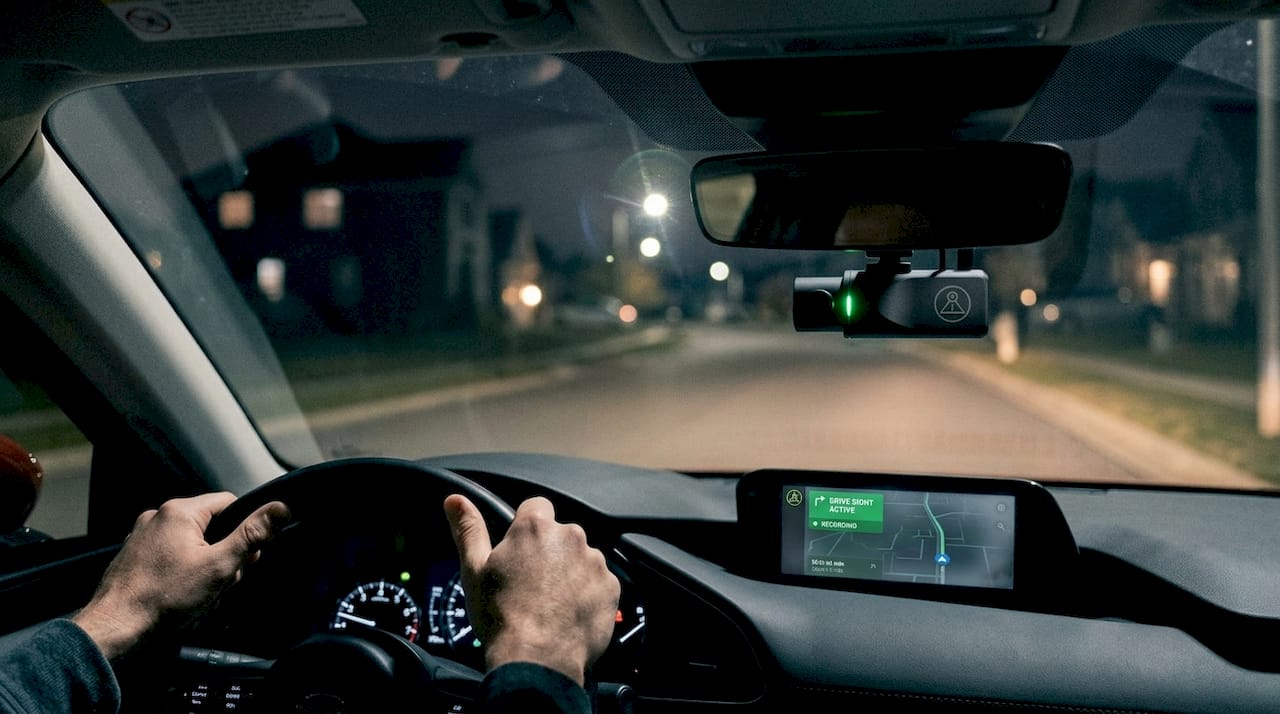
Night driving dashcam performance is defined as a dashcam’s ability to record clear, usable footage under low-light or zero-light conditions, and it is the single most important specification for any driver who wants reliable incident evidence after dark. Night driving accounts for roughly 50% of fatal accidents despite representing only 25% of total driving time. That gap means your dashcam’s daytime clarity is nearly irrelevant if it fails when darkness falls. The technologies that determine this capability, including sensor design, lens aperture, and image processing, separate cameras that genuinely protect you from ones that simply record black noise.
What is night driving dashcam performance, technically?
Night driving dashcam performance depends on three hardware and software layers working together. Understanding each one tells you exactly why two cameras at the same price can produce wildly different footage on the same dark road.
Sensor technology is the foundation. The Sony STARVIS 2 back-illuminated sensor is the current industry gold standard because its pixel architecture captures more photons per pixel than front-illuminated designs. Back-illuminated means the wiring sits behind the light-sensitive layer rather than in front of it, so nothing blocks incoming light. Large sensors deliver up to 200% better low-light sensitivity compared to older, smaller sensor designs. That is not a marginal improvement. It is the difference between reading a license plate and seeing a blur.
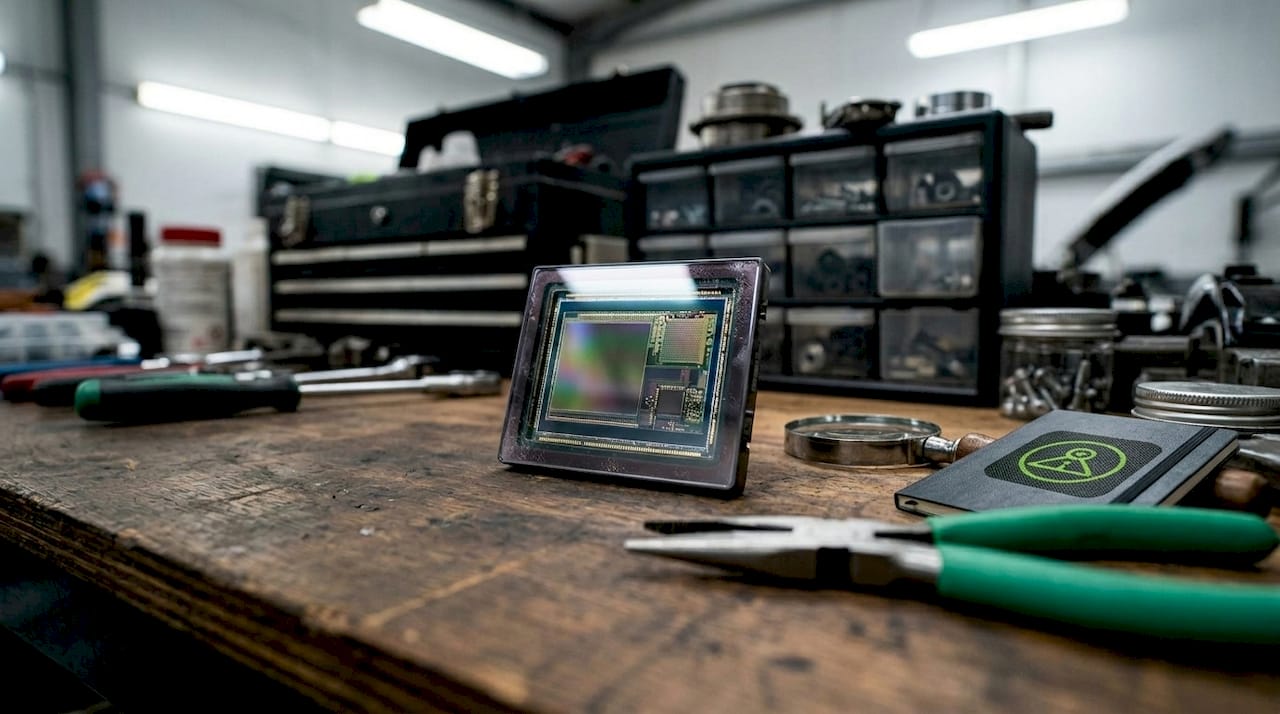
Lens aperture controls how much light the sensor receives in the first place. An f/1.6 aperture lets in significantly more light than f/2.0. For night recording, you want the widest aperture available, ideally f/1.8 or lower.
Image processing handles what the sensor captures. Key technologies include:
- HDR (High Dynamic Range): Combines multiple exposures to balance bright headlights against dark shadows, preventing washed-out lights and black voids in the same frame.
- WDR (Wide Dynamic Range): A similar processing approach that prevents overexposed headlights and shadow loss in mixed nighttime lighting.
- Noise reduction algorithms: These suppress the grainy static that appears in low-light footage. Noise reduction can improve night footage clarity by up to 60% when paired with a quality sensor.
- ISO sensitivity: Higher ISO amplifies available light but also amplifies grain. Good noise reduction manages this trade-off automatically.
Infrared (IR) illumination is worth mentioning separately. IR LEDs work well for interior cabin recording, such as monitoring passengers in a rideshare vehicle, but they are largely ineffective for exterior road recording because they cannot illuminate the road ahead at driving speeds.
Pro Tip: When comparing dashcams, check the sensor model number directly. “Night vision” in a product title is a marketing phrase. “Sony STARVIS 2” is a verifiable specification.
How does night vision performance vary across dashcam models?
Not all dashcams perform equally in low light, and the gap between price tiers is more pronounced at night than during the day. A budget camera might look acceptable in a sunny parking lot demo and fail completely on an unlit highway.
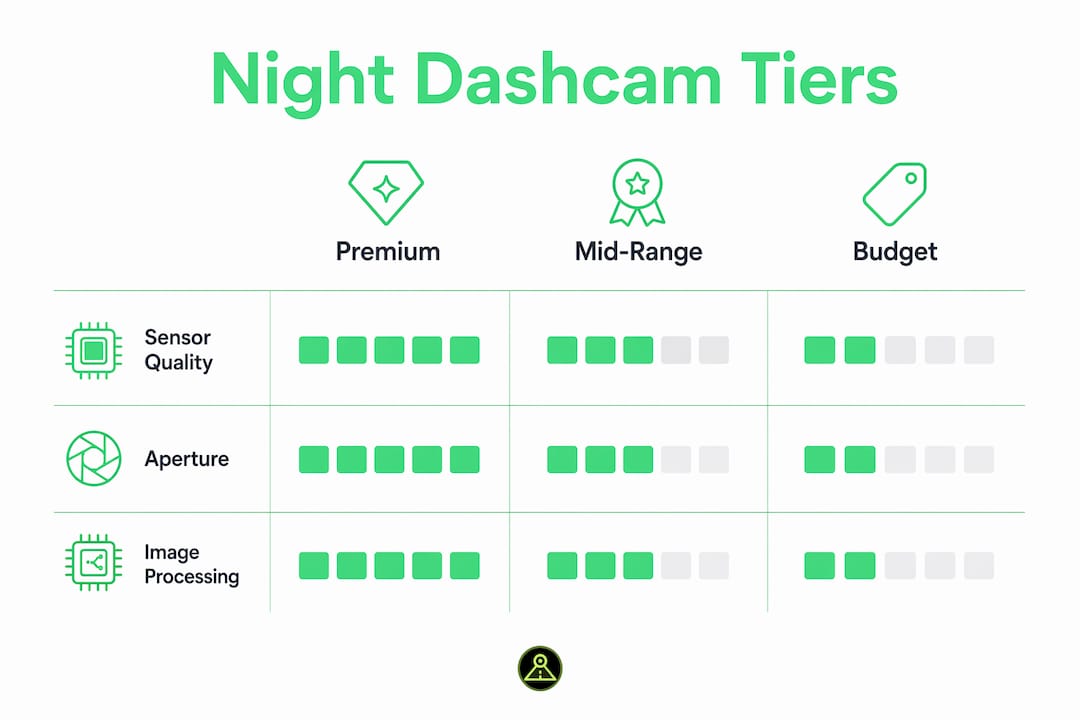
Budget tier (under $60): Most cameras in this range use generic CMOS sensors with limited aperture and basic image processing. Night footage is often usable only in well-lit urban areas with street lighting. License plate readability at speed is unreliable.
Mid-range tier ($80 to $150): This is where performance improves meaningfully. Mid-range cameras with Sony STARVIS sensors and wide aperture can read license plates reliably when moving slowly or stopped at night in urban settings. For most commuters and city drivers, this tier delivers practical incident evidence.
Premium tier ($150 and above): Cameras like the VIOFO A229 Pro use dual Sony STARVIS 2 sensors with HDR Night Vision 2.0, capturing front and rear footage at near-daylight quality. In independent tests, the VIOFO A229 Pro reads license plates at 40 to 50 feet in near-total darkness. The REDTIGER F7NP is another model in this tier that uses STARVIS 2 technology for comparable low-light results.
Here is a direct comparison of key night vision specifications across tiers:
| Model / Tier | Sensor | Aperture | HDR/WDR | Approx. Price |
|---|---|---|---|---|
| Budget generic | Generic CMOS | f/2.0 or narrower | Basic or none | Under $60 |
| Mid-range (STARVIS) | Sony STARVIS | f/1.8 | WDR | $80–$150 |
| VIOFO A229 Pro | Sony STARVIS 2 (dual) | f/1.6 | HDR Night Vision 2.0 | $150+ |
| REDTIGER F7NP | Sony STARVIS 2 | f/1.8 | HDR | $130+ |
One critical point that nighttime dashcam reviews consistently confirm: 4K resolution alone does not improve night footage quality. A 4K camera with a small sensor produces noisier night footage than a 1080p camera with a large, quality sensor. More pixels on a small sensor means each pixel captures less light, which increases noise. Resolution matters for daytime detail. Sensor quality determines night performance.
Pro Tip: Check for dashcam video quality settings that let you adjust bitrate and exposure manually. Higher bitrate preserves more detail in dark scenes where compression artifacts are most visible.
What challenges and misconceptions affect dashcam performance at night?
Several factors limit night footage quality that no sensor technology can fully overcome. Knowing these limits helps you set realistic expectations and avoid buying decisions based on misleading marketing.
Common performance limiters include:
- Vehicle speed: Fast movement reduces the time each frame has to gather light, increasing motion blur. At highway speeds, even premium cameras struggle with plate readability on unlit roads.
- Weather conditions: Rain, fog, and snow scatter light and reduce contrast. Heavy rain and zero ambient light degrade footage clarity even with top-tier sensors.
- Absence of ambient light: Rural roads with no street lighting are the hardest environment for any dashcam. Without some ambient light source, sensors have almost nothing to amplify.
- Dirty or tinted windshields: A film of grime or a dark window tint reduces light transmission before it even reaches the lens. Clean your windshield regularly and consider how window tinting affects light transmission if you are installing aftermarket tint.
- Vibration and mounting quality: Secure mounts and lighter camera bodies prevent windshield vibration from blurring night footage. A loose mount that barely affects daytime video can make nighttime footage unusable.
The most common misconception is that any dashcam labeled “night vision” will capture clear footage in darkness. Many cameras record at night but produce footage that is too noisy, blurry, or overexposed to identify vehicles or read plates. “Records at night” and “captures usable night evidence” are not the same claim.
How to choose and optimize a dashcam for night driving
Selecting the right camera and setting it up correctly makes a measurable difference in the footage you get on dark roads.
- Prioritize sensor specification over resolution. Look specifically for Sony STARVIS 2 if budget allows, or Sony STARVIS at minimum. Experts recommend STARVIS 2 sensors for anyone who needs clear incident evidence at night.
- Choose the widest aperture available. f/1.6 is ideal. f/1.8 is acceptable. Avoid cameras that do not publish their aperture specification, as this is often a sign of a generic, low-quality lens.
- Confirm HDR or WDR is present. This matters most in urban environments where you face oncoming headlights and streetlight pools simultaneously.
- Use a high-endurance MicroSD card. Standard cards wear out quickly under continuous recording. Samsung PRO Endurance and Sandisk High Endurance cards are built for dashcam duty cycles.
- Mount the camera securely behind the rearview mirror. This position reduces vibration, keeps the lens clean, and places the camera where it does not obstruct your view.
- Enable parking mode with a reliable power source. For overnight recording, supercapacitor-based power systems handle extreme temperature ranges better than battery-based designs, which is especially relevant in winter months when low-light conditions extend well into morning commutes.
- Review footage settings in the app. Bitrate, exposure compensation, and loop recording length all affect night footage quality. Higher bitrate preserves more detail in dark scenes.
Pro Tip: If you are evaluating a dashcam for night performance, search for real-world test clips on YouTube from reviewers who test specifically in unlit or rural conditions, not just parking lot demos under artificial lighting.
Key takeaways
Night driving dashcam performance is determined by sensor quality, aperture width, and image processing, not resolution, and the Sony STARVIS 2 sensor currently defines the top tier of low-light capability.
| Point | Details |
|---|---|
| Sensor quality is primary | Sony STARVIS 2 back-illuminated sensors deliver the clearest low-light footage available in 2026. |
| Aperture determines light intake | Choose f/1.8 or wider; narrower apertures produce noisier footage in dark conditions. |
| HDR/WDR balances contrast | These processing features prevent blown-out headlights and black shadows in the same frame. |
| 4K does not equal better night vision | Small 4K sensors capture less light per pixel, producing noisier footage than large 1080p sensors. |
| Mounting and environment matter | Secure mounts, clean windshields, and ambient light availability all affect final footage quality. |
Why sensor investment pays off when it matters most
We have tested and reviewed dashcam footage from dozens of incidents, and the pattern is consistent: cameras that looked adequate in daytime demos failed to capture usable evidence at night. The footage existed. The detail did not. A blurry plate or an unreadable vehicle color is legally and practically worthless.
The trade-off between price and night performance is real, but it is not linear. Spending $80 more to move from a generic sensor to a Sony STARVIS 2 model is not a luxury upgrade. It is the difference between footage that holds up in an insurance dispute and footage that gets dismissed. We have seen drivers lose claims because their camera recorded an incident but could not identify the other vehicle.
What we find underappreciated is the role of software. AI-based noise reduction and frame interpolation are starting to appear in premium firmware updates, and they genuinely extend what a good sensor can do in marginal light. This is an area where smartphone-based dashcam solutions, which receive regular software updates, have a structural advantage over hardware-only devices that ship with fixed firmware. The hardware ceiling matters, but software is closing the gap faster than most drivers realize.
Set realistic expectations. Even the best dashcams blur at high speeds or in very dark rural settings without street lights. The goal is not perfection. The goal is footage that is clear enough to be useful when you need it most.
— Cyberlab Automation
How DriveSight helps you record better night footage
DriveSight’s Phone Dashcam app turns your Android device into a capable dashcam that benefits directly from your phone’s camera hardware and continuous software improvements. If you already own a recent Android phone with a quality rear camera, you have a sensor that often rivals or exceeds dedicated budget and mid-range dashcam hardware.
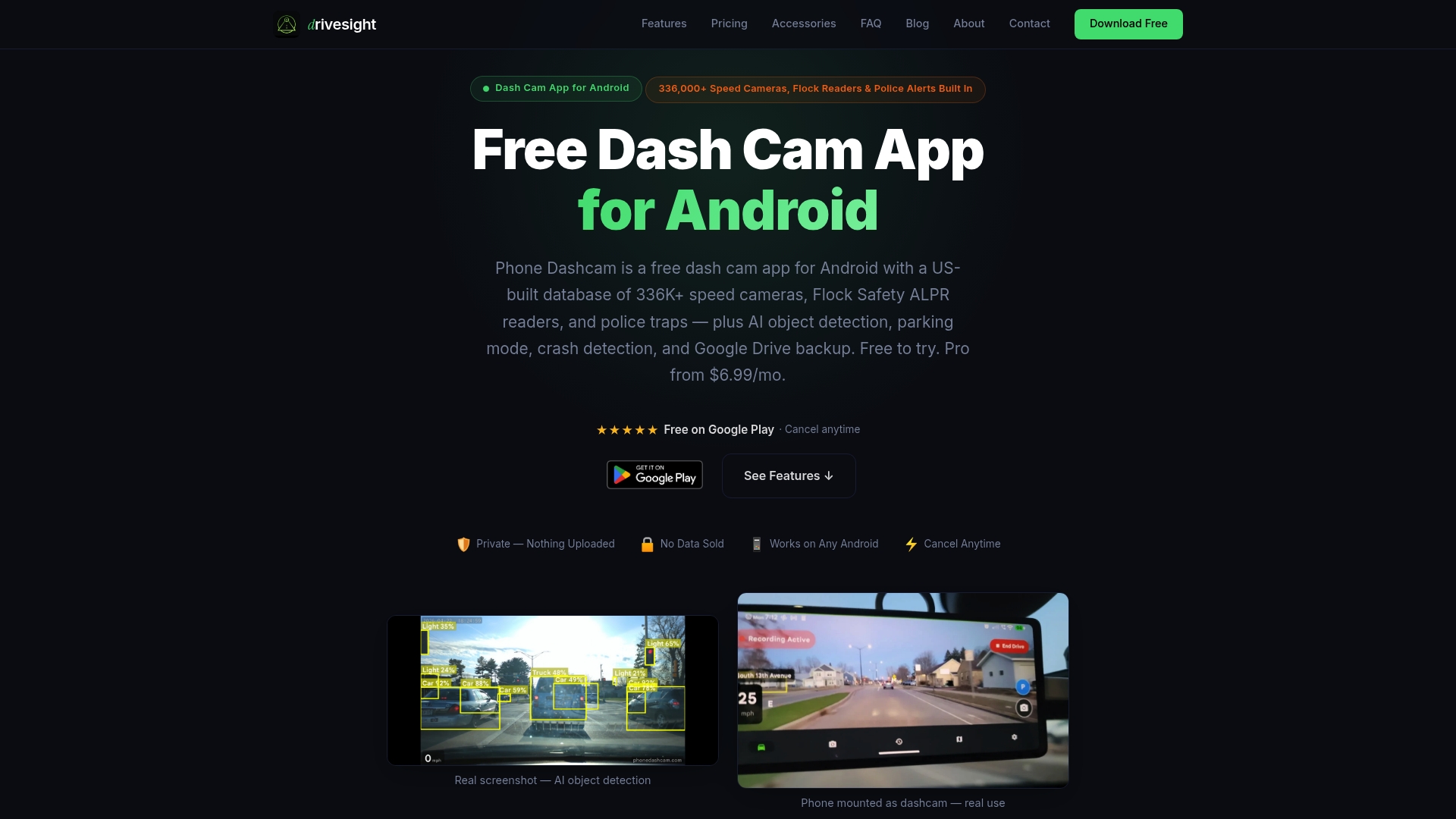
The app includes automatic crash save, parking security mode, and cloud backup, so your night footage is preserved and accessible even after an incident. Regular app updates mean AI-based detection and image processing improvements reach your device without buying new hardware. For drivers comparing options, the phone vs. dedicated dashcam breakdown explains exactly where each approach wins. Download DriveSight free on Android and start recording with the hardware you already have.
FAQ
What is the most important spec for night dashcam performance?
Sensor quality is the single most important factor. The Sony STARVIS 2 back-illuminated sensor currently delivers the best low-light performance available in consumer dashcams.
Does 4K resolution improve night driving footage?
Not automatically. 4K cameras with small sensors produce noisier night footage than 1080p cameras with larger, higher-quality sensors because each pixel captures less light.
How well do dashcams work at night in rural areas?
Performance drops significantly without ambient light. Even premium cameras with STARVIS 2 sensors experience reduced plate readability on unlit rural roads at highway speeds.
What does HDR do for nighttime dashcam recording?
HDR processing combines multiple exposures to balance bright headlights against dark areas in the same frame, preventing the overexposed lights and black shadows that make night footage hard to read.
Can a phone app replace a dedicated dashcam at night?
A modern Android phone with a quality rear camera and a dedicated app like DriveSight can match or exceed budget and mid-range dedicated dashcams, especially when the app receives regular AI and processing updates that improve low-light output over time.
Recommended
- Best Dashcam Video Quality Settings for Clear Footage
- Dashcam recording modes explained for Android drivers
- Dashcam timelapse recording: Real examples and smart setups
- Phone Dashcam Features in 2026: AI Detection, Parking Mode, Cloud Backup and More
Get Phone Dashcam free
Loop recording, crash detection, GPS tracking, and AI object detection — all in your phone. No new hardware required.
Download Phone Dashcam